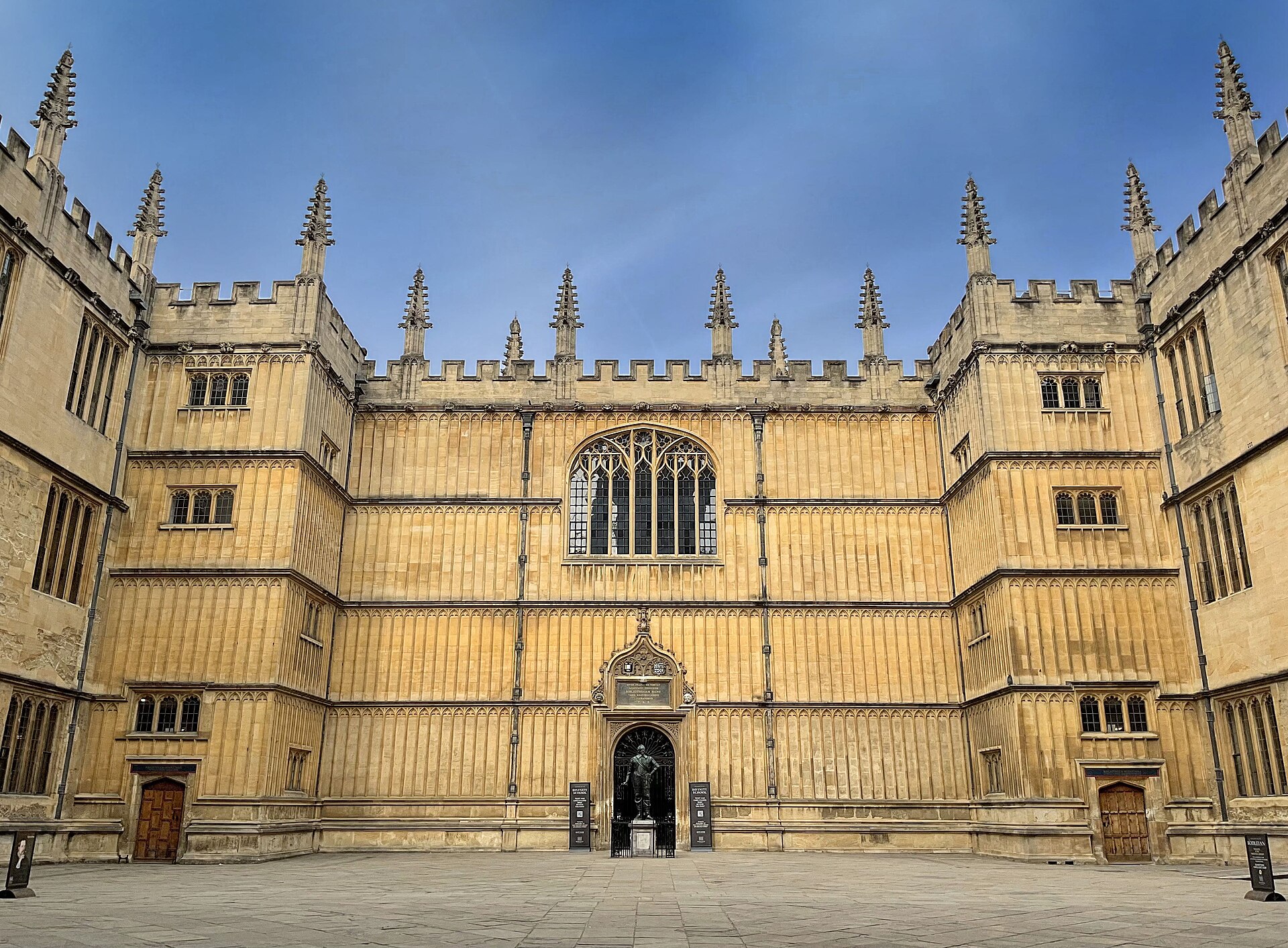
Eleanor Voss, Bodleian Library, Oxford · James Marsh-Hale, London
Co-authors. Collaborators. The next persons holding it.
Compiled 2024–2026. Published London, 2026.
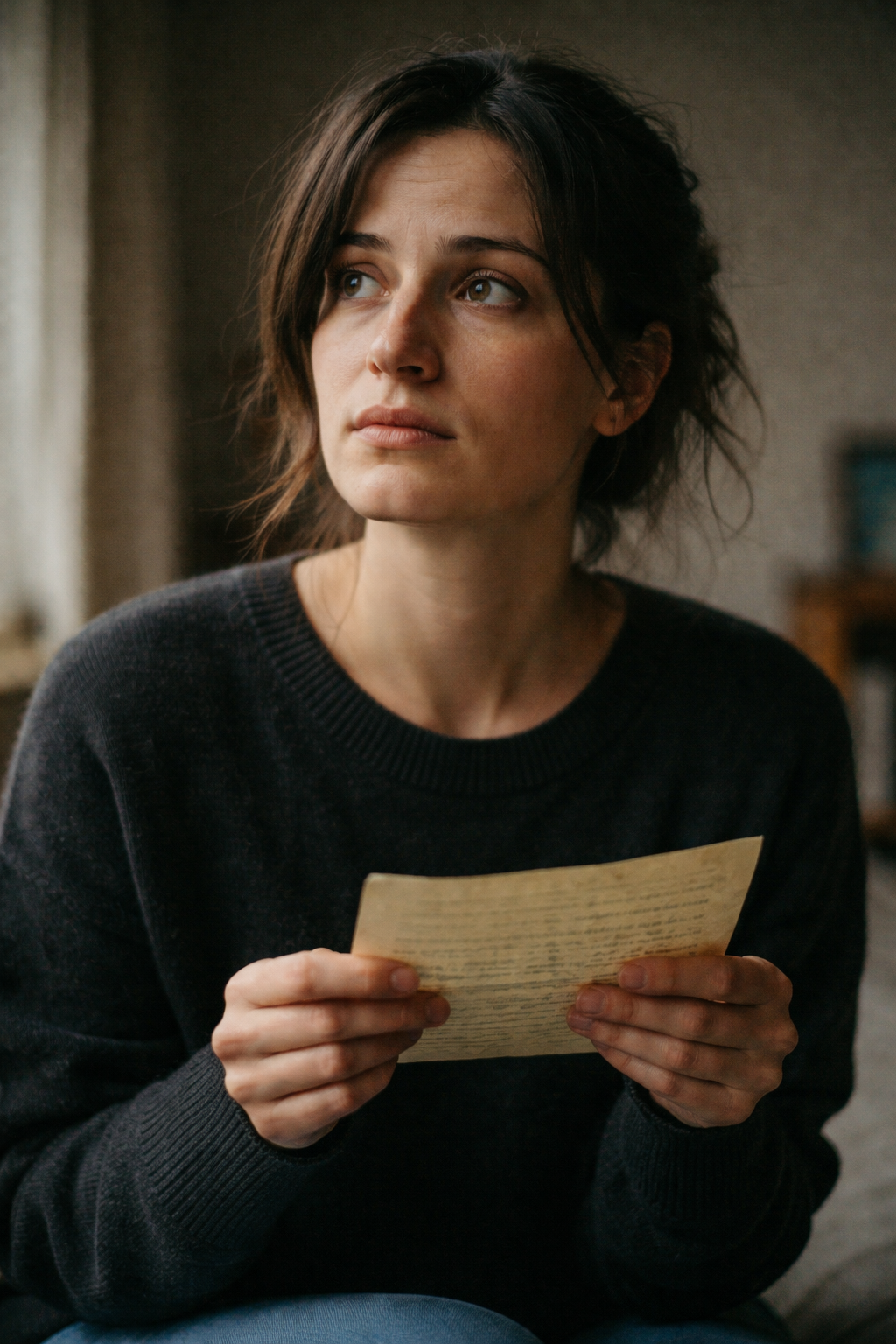
Mr. Marsh-Hale —
I am writing to you because you are listed as the depositing donor for MS. Marsh-Hale 3, the Hale family papers held in our Special Collections. I have been working with this collection for three years as part of a project on medieval Worcestershire property records, and in particular with item 7 — the document you will know as Matilda's letter, written approximately 1390.
Item 7 has been in our queue for multispectral imaging since October 2022. We received the results last week. A substantial portion of the central text, previously illegible due to water damage and fading of the ink, has been recovered. I have read the recovered section.
I do not quite know what to do with this. I would like to speak with you if that is possible. I can come to London, or we could meet here in Oxford if you are able to travel. I realise this is a somewhat unusual way to initiate a professional correspondence. I did not know how else to begin.
Eleanor Voss
Bodleian Library, University of Oxford
Dr. Voss —
Yes. I know the document. I have been waiting, though not quite certain in what form it would arrive. I am in London. I am seventy-eight years old and I move carefully, but I travel. Could we meet in Oxford? I have a great deal to tell you and some of it will take a while.
I suggest lunch. There is usually good soup near the Bodleian. You would know better than I would where.
James Marsh-Hale
I am writing this in Brixton in the spring of 1949. I am seventy-five years old. Rachel has been gone eight years. Edmund is in the New Towns. Ruth is at the Bar. My body is not what it was.
I found this family's history in a reading room in Oxford thirty years ago and I have been thinking about it ever since without quite finding the right form for the thinking. I am going to try to find it now, because I think I may not have a great many more opportunities.
What I found in Oxford was a family that had been asking one question in different centuries and with different tools and in different registers, and that had never quite answered it, and that had kept asking. The question is: is what I have done sufficient? Ranulf asked it on his deathbed in 1115. Thomas Hale asked it in 1382 in the form of a remembrance addressed to his son. The Civil War brothers asked it every time they wrote to each other from opposite sides of a war. Augusta asked it in her journal, precisely and without self-pity, every time she calculated what she had been permitted to do against what she was capable of. My father asked it in France in 1916, in a letter to my mother, from a hole in the ground. Edmund Hale — my father's father in the irregular line that neither of them chose — asked it in a locked room in Shropshire in 1882 and did not answer it, and the not answering was the end of him.
The question has not been answered. I do not think it can be answered once, in a way that settles it. I think it is answered daily, by the choice to attend to what is actually in front of you, to look at the accurate picture rather than the reassuring one, to come home when you could go elsewhere, to ask and not to stop asking. My mother called this seeing to the pig, because that is what Thomas Hale called it in 1382, and because it is a better description than most of the more elevated formulations I have encountered.
I am writing this for whoever comes after. I do not know who that is. It may be Edmund's children or their children or someone I cannot imagine, someone whose connection to this family runs through a line I cannot trace. Matilda knew there were two lines. I did not, when I read her letter. I think she was right that both matter.
What I want to say to whoever comes after is this: you are from somewhere. It is a small place and an old one and it has never been famous for anything except being there, persisting, holding the question open when it would have been easier to close it. You did not choose this. It is still yours. The choosing is not in the inheritance. The choosing is in what you do with it. The choosing is in whether you ask.
Keep asking. See to the pig. 🐷
James, I have been sitting with the draft of Book X for two days and I want to say something about it that I find difficult to put precisely.
You have written about me as though I am the end of something. The final destination. The person the archive was always travelling toward. And I understand why — the structure of the ten books builds to this, and Matilda's letter and Thomas's letter both seem addressed forward, and I am the forward.
But I am not sure I want to be a destination. I think I would rather be a continuation. I think what Matilda was describing was not an endpoint but a resumption: the line that went underground in 1373 and has come back up now, not to close something but to keep it open.
I am forty years old. I do not have children yet. I do not know whether I will. But the question does not require children to continue. It requires attention. It requires someone to keep asking whether what they have done is sufficient, which I have been doing professionally for fifteen years without knowing it had a name or a history.
I think the book should end with me asking the question. Not answering it. Just: asking it. As a continuation, not a conclusion.
What do you think?
Eleanor, yes. You are right. I wrote it as an ending because I am eighty years old and I have been reading toward this for seventy years and I overcorrected. The error is exactly what you have identified: treating the discovery as a destination rather than a resumption.
The archive has never ended. Every document in it was written for the next document. Matilda's letter was written for whoever came after. Thomas's letter was written for whoever came after. The chronicle Brother Eadmer wrote in 1121 ends: this chronicle to whoever comes after. The whole thing is addressed forward. It has always been addressed forward.
You are not the end of it. You are the next person holding it.
I will revise the final chapter.
The book is finished. Eleanor and I have read it through together one last time and we are both satisfied with it, which is to say we have both found things we would change and have decided to leave them as they are because the changes would be improvements in the editing and not in the truth.
I have been thinking about Ranulf de la Hale standing in the hall in Worcestershire in the autumn of 1066, not speaking the language of the people he had been given authority over, not knowing whether what had been given to him was legitimately his or whether the people he was now responsible for would ever accept him. He had no archive. He had no family history. He had a strip of confiscated Saxon land and a question he did not yet know he was asking.
I have nine centuries of archive. I have the question in thirty languages, all of them saying the same thing. I still cannot answer it cleanly. I think Matilda was right that you are not supposed to answer it cleanly. You are supposed to keep it open and keep working and trust that whoever comes after will carry it forward.
Eleanor will carry it forward. I am fairly sure of this. She has the quality. She has had it all along. Matilda noticed it six hundred years before I did, which speaks to Matilda's exceptional perceptiveness and to the slowness of institutions.
I am eighty-one. The pig still needs seeing to. I am going to make tea.
The Hale family papers — comprising the Frere collection, the Marsh-Hale papers, and the documents reproduced in this volume — are held at the Bodleian Library, University of Oxford, under the reference MSS. Hale-Marsh. The collection is open to researchers. Matilda's letter is held in a climate-controlled case in the Special Collections reading room. The enhanced imaging is available digitally.
The deed-box described in these volumes — the oak chest with lock and key, purchased or inherited by Robert Hale no later than 1490, in which every significant document of the family's history was kept for four and a half centuries — is also at the Bodleian. It is in reasonable condition. The lining has been repaired at least twice. The crack in the lid, noted by Brother Anselm in 1538, is still visible if you look for it.
The beehives at Halecroft are still kept, by a family named Parry who farm the land that was once the Hale holding. They are not Hales. They do not know about the archive. They keep the bees because the bees are there and somebody has to.
To whoever shall read this after I am gone, which will be soon enough:
I have lived in this village since before any man in this room was born and I shall likely live here after most of them are gone. I knew Ranulf de la Hale that built the hall, though I was young then and he was old. I knew his son Leofric that built the Hale in the wood. I knew every man and woman of that family through five generations to Richard that is dead of the plague and his sons that are dead and his son's son Thomas that stands before the court now.
* I have kept these bees through six reigns and two plagues and a rising that came to nothing and a hunger that came to much, and I have known the sons and daughters of this family since before their fathers were born, and I set down what I know here because I am the last who knows it.
* And I do set down here, for the keeping of the record, that the line does not end with the sons of William Hale but continues also through his daughter Margery, who married one Thomas Voss of Pershore in the year of Our Lord 1373, and whose line I have followed these thirty years and know to be sound.
* Margery is a good woman and a careful one and she has a daughter named Alice who has her grandmother Aelswith's eyes, which I remember though Aelswith has been dead these forty years and the world has changed more times than I can comfortably count since then. The blood runs in both lines. This is what families do. They go underground sometimes and come back up somewhere else and they are still the same thing they always were, which is themselves.
* I write this not for the sons of this house, who know who they are. I write it for whoever reads it last, who will not know where they are from until this moment, and who will perhaps think it makes no great difference. It makes no great difference and it makes all the difference. You are from here. This is where you are from. Halecroft, in the county of Worcester, which is a small place and an old one and which has been your home since 1066 whether you knew it or not.
You ask whether I have done enough. I do not know whether I have or not. I know only that I asked, and that the asking is what this family does. They ask whether they have done enough. They do not always answer, and perhaps there is no answer, but they ask.
The boy Thomas asked it at eleven, standing in an empty yard with a cooking pot, though he did not use those words. He said: I had better see to the pig. It is the same question.
I am very old and I have kept bees longer than anyone living can remember and I have seen more than I will say and I tell you this for nothing: a family that keeps asking whether it has done enough will keep the land. A family that stops asking will lose it, sooner or later, one way or another.
Keep asking. Keep the land. See to the pig.
To whosoever finds these words — know that I was here. That I lived. That I loved, and was afraid, and buried my children, and still I lived.
The priest is gone. The lord is gone. Half the village is gone. I write this not for God — God has not answered — but for whoever comes after. So that they know a woman named Matilda held this place together when everything fell.
My father called this land Halecroft. I will call it that still. I will plant barley in the spring. I will not leave.
If you are of my blood — and I believe someday someone will be — then know: we did not bend. We did not break. We only kept going.
That is what it is to be of this line.
Ten volumes. Nine centuries. One question.
Dad,
I found the shoebox. I've been going through the house for three weeks and I found it this afternoon on the second shelf of the spare room bookcase, behind the Ordnance Survey maps. Nike box, size 10. I don't know whose shoes those were.
I looked through everything. The medals. The photographs. The diary with the Latin I can't read and the drawings I can. And the conveyance — I know you knew what it was because you wrote Property: keep on the Post-it note on the back.
At the bottom of the conveyance, Dad, there's a note in a different hand from the 1640s. You knew it was there. You wrote Property: keep. Did you know what it said? Did you know about Halecroft?
I've been sitting with the shoebox for two hours trying to decide whether to look it up tonight or wait until I'm back in Durham with access to the databases. I decided to wait. I don't quite want to know yet in the middle of your house when you're not here to hear it.
The job at the Bodleian is still open. I saw it again yesterday. Medieval land records, West Midlands, based in Oxford. I've been not-applying for it for three months because Oxford seems like a statement and I'm not sure I'm ready to make it. But I think I'm going to apply.
I think you would have liked me to apply.
I think the shoebox wants me to apply.
I miss you. The house smells like your books and your tea and I keep expecting to hear you coming downstairs.
Eleanor
MSS. Marsh-Hale 3, item 7 — Finding Aid Entry
Compiled by James Marsh-Hale · Submitted to the Bodleian, March 2001 · Personal annotated copy
Matilda's letter. Single document, mounted between glass plates. Physical condition: fragile. The document is written on a fragment of medieval parchment approximately 15cm × 10cm. The text is in late Middle English, consistent with a date of c.1390. The hand is that of a literate layperson, not a trained scribe.
Legible text (partial): opening section (lines 1–8) and closing section (lines 24–27) are legible to the naked eye. Central section (lines 9–23, approximately) is damaged by water and not currently legible.
Significance: considerable. The document is the only surviving text in Matilda of Halecroft's hand. It appears to have been placed deliberately in the deed-box and found and replaced on at least two subsequent occasions without its contents being fully known.
Recommendation: multispectral imaging of the central section is strongly advised when resources permit. The damaged portion may be recoverable and the significance of the document warrants the effort.
— James Marsh-Hale, March 2001.
[Annotation in different ink, added later: I waited twenty-three years. I should have pressed harder. E.V. found it in 2024.]
By the end of the archive, James reads the letter as addressed to Eleanor — and to whoever reads last.
Final two sentences added February 2024 · three weeks after the imaging results · in recent ink · written slowly
A Nike shoebox, size 10, slightly worn at the corners, the lid sitting slightly askew. On the front, a Post-it note in a man's handwriting, slightly aged: Property: keep.
Inside the open box: a small stack of photographs, face-down. A folded document. A slim diary. Two campaign medals in a small box.
David Voss assembled this shoebox in 1983 when his father Harold died. He kept it for thirty-six years. He never told Eleanor what was in it. He wrote Property: keep on the front and put it on the shelf behind the Ordnance Survey maps.
The photographs, face down: Harold Voss and his family, 1905. The diary: Edmund Voss's, 1888, with the entry wondering where the name Voss came from. The medals: Harold's, from the First World War. Two of them.
The folded document at the bottom: the 1643 conveyance, transferring a cottage and half-acre at the edge of Halecroft parish. In the margin, in a seventeenth-century hand: this land has been in this family since our grandmother's grandmother came from Halecroft.
David Voss put the Post-it note on the back of this conveyance. He knew what it was. He did not know what to do with that knowledge. He kept it for thirty-six years and left it for Eleanor to find.