Mid-century plain style. The Blitz. The New Towns. Edmund Marsh-Hale and the Ministry of Supply. The question in Courier New. The pig is still there.

1. I have completed the inspection of the seven premises listed in Appendix A and I report as follows.
2. Of the seven premises, four are suitable for the purpose stated without structural modification. One requires modification to the eastern wall before it can be considered safe for the personnel numbers proposed. Two should not be used for the stated purpose under any circumstances, as the load-bearing calculations do not support the additional weight of the equipment specified in the operational brief.
3. I draw the attention of the Director of Works to the fact that the figures I was given in the original brief for the weight of the equipment in question were underestimates. The actual figures, which I have independently verified with the manufacturers, are given in Appendix B. The difference is not trivial. In two of the seven cases it is the difference between a safe installation and a dangerous one.
4. I understand that there is urgency in this matter. I confirm that my assessment is as rapid as is consistent with accuracy. An assessment that is rapid but inaccurate is not an assessment. It is a guess. I have not provided a guess.
5. I am available to discuss these findings at any time convenient to the Director of Works.
E. Marsh-Hale, Senior Structural Engineer. Ministry of Supply, Whitehall, London.
Fourteen premises assessed in this survey period. Seven have sustained Category A damage (total or near-total loss — demolition recommended). Four are Category B (substantial damage — repair required before occupation). Three are Category C (minor damage — occupiable with precautions).
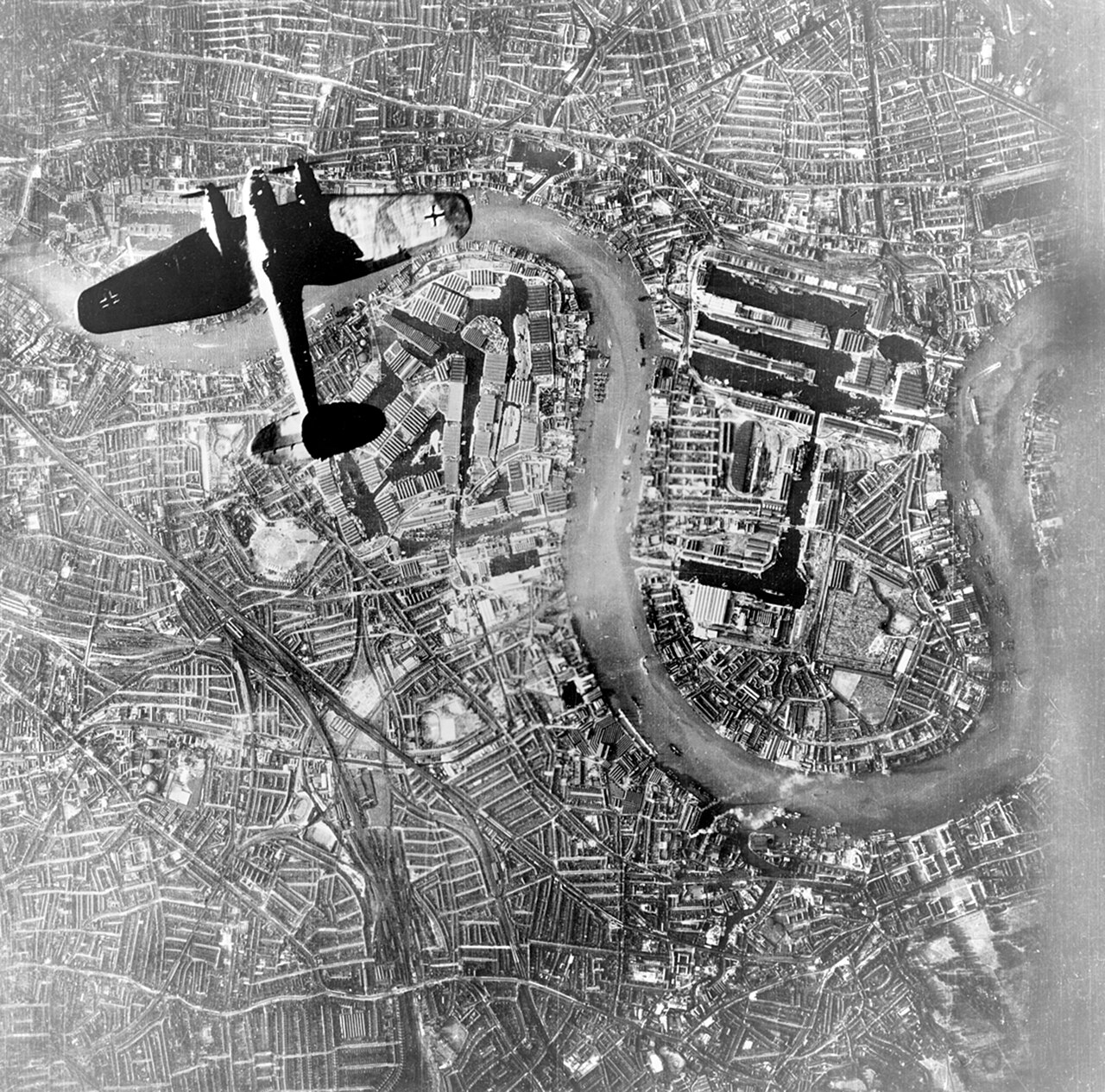
Note: Brixton Road, numbers 12 through 24. Category A. The structural damage to these premises is consistent with a direct hit followed by fire. The firemen's report indicates the fire was extinguished by 0400 hrs. I surveyed at 0600. The walls of numbers 16, 18, and 20 are standing but should not be assumed sound — the mortar joints have been compromised by heat and the facades are potentially unstable.
⬆ Hover to declassify · Some passages remain restrictedPersonal note (appended, not for the official record): Number 14 Brixton Road was my grandmother Clara's house. She died in 1914 and my father Thomas grew up there. The house is Category A. The neighbours tell me a family of four were in the shelter next door when the raid began and are safe. I have added their names to the survivors' register, which is the only useful thing I have done today.
| ITEM | WEEKLY ALLOWANCE | NOTES |
|---|---|---|
| Meat | 1s. 2d. per person | Supplemented by offal (not rationed). Used everything. |
| Bacon / Ham | 4 oz per person | Often less available than permitted. Recorded shortfall. |
| Sugar | 8 oz per person | James gets an extra half-ounce in his porridge. Don't tell him he'll make demands. |
| Tea | 2 oz per person | Edmund drinks more than his share. Has done since 1939. Recorded without comment. |
| Fats (butter/marg.) | 4 oz per person | Margarine mostly. Butter saved for Sunday. |
| Cheese | 2 oz per person | Increased to 8 oz this quarter. Recorded with something approaching relief. |
| Eggs | 1 per person per week | When available. James gets 2 if only 1 available — growing boy. Edmund agrees. |
Ruth — I am writing from Harlow, which is not yet a town but is in the process of becoming one, and which will be a very good town or a very poor one depending on whether the people building it understand that what makes a place habitable is not the plans but the corners. The corners where people stop and talk, where the post box is, where the bench catches the afternoon light. I am employed to design the structures. I spend most of my time thinking about the corners.
James is eight and has Dad's habit of reading whatever is in front of him at table, which at present includes the evening paper, a biography of Brunel, and the box of chocolates from Aunt Ada, which he has been reading the ingredients of for three days. He will be a historian or a structural engineer and Dorothy says it is impossible to tell yet. I think it is already clear and I am not going to say which because he will decide for himself anyway, which is the correct method.
I have been thinking about the family archive. Dad's notes are in the box. His letter from 1949 — which he wrote before 1949, I know, but you know what I mean, the letter he wrote for whoever came after — I read it again last week. He was right about the question. He was right that the answer isn't a destination. I am trying to act accordingly. I think Dorothy already does.
See to the pig. 🐷 You know what it means. I know you do.
James is fifteen today. He has been reading the archive since he was nine, which means he has been reading it for six years, which means he has now spent more of his life reading it than not reading it, which seems about right for someone who will carry it forward. I have told him as much as I can about what is in it and what it means. He listened with the complete attention of a person who already knows most of what you are telling them. That attention is also a family characteristic, which I note without comment.
The question I keep returning to this year — in the plans, in the buildings, in the ordinary problems of making a place work — is whether what we are making is sufficient. Not good enough. Sufficient. There is a difference and the difference is what the question is. Good enough means it passes the test. Sufficient means it is what was actually needed. Most things I build are good enough. Some of them are sufficient. The ones that are sufficient are the ones where I got the corner right.
I am going to tell James something that I don't think I have said clearly before. The pig is not a metaphor. The pig is the actual next thing. The thing that is right in front of you that requires doing. If you attend to the next thing with full attention, then the big things take care of themselves, because the big things are made of next things. He will understand. He has been understanding it for six years.
Left Page — Personal Observations
Raid again last night. The usual noise, the usual shelter. I brought the notebook. There is something clarifying about working during a raid — the fear reduces everything to what actually matters, which is: is the drawing correct? Does the specification hold? These are the right questions. They are always the right questions.
I have been thinking about the gap between designed capacity and actual capacity. Edmund talks about this in his factory reports — the buildings that were specified for one load and are carrying another. I think this is true of people also. We are specified for one thing and life requires another, and most of us are carrying loads we were not designed for and managing it, and nobody is measuring the gap.
I am carrying my father's expectations (engineer; the son he did not have) and my mother's expectations (wife; reasonably soon) and the Ministry's expectations (technically excellent; professionally invisible) and my own expectations (all of the above; simultaneously; without complaint). I have been carrying these loads for twenty-five years. The deflection is manageable. I note it here because deflection is only manageable when it is measured.
Edmund asked me what I thought about something today and wrote down the answer. He has done this twice now. I find this notable and am noting it.
Right Page — Technical Specification
Drawing ref: MAP/42/1107-B
Revised ammunition storage bay
Weston Engineering, secondary facility
Load capacity increase: from 8 tonnes to 12 tonnes per bay.
Structural note: the original specification (MAP/41/0892) would produce a stress concentration at the NE corner of the main bearing wall under the revised loading. Insufficient longitudinal reinforcement at the corner junction. Added gusset plate detail (see inset, lower right) to distribute the stress along the full wall length. This was not in the original brief.
Specification does not call for it. Physics does.
Variation logged: MAP/42/1107-B/var.1
Reason: structural requirement not captured in original spec.
Approved by: [to be confirmed by section head]
A wartime Ministry of Supply internal memorandum on standard buff Ministry paper, typed in the official format with reference numbers and departmental headings. The main body: a damage assessment, capacity calculations, recovery timeline. Professional, precise, correct. The form does not ask for names.
At the bottom of the page, below the typed recommendation section, two handwritten lines in a different ink. Edmund Marsh-Hale's hand — identified by comparison with his journal entries from this period:
Workers killed: 2. Their names were Arthur Croft and Mary Hennessy.
Arthur Croft, 43. Machine operator, Weston Engineering, Silvertown. Three children. Had worked at Weston for eleven years.
Mary Hennessy, 27. Part-time finisher, Custom House. Started at Weston Engineering six weeks before the raid. Her employment card is in the London Metropolitan Archive. Someone has written see accident record in pencil in the margin and then erased it.