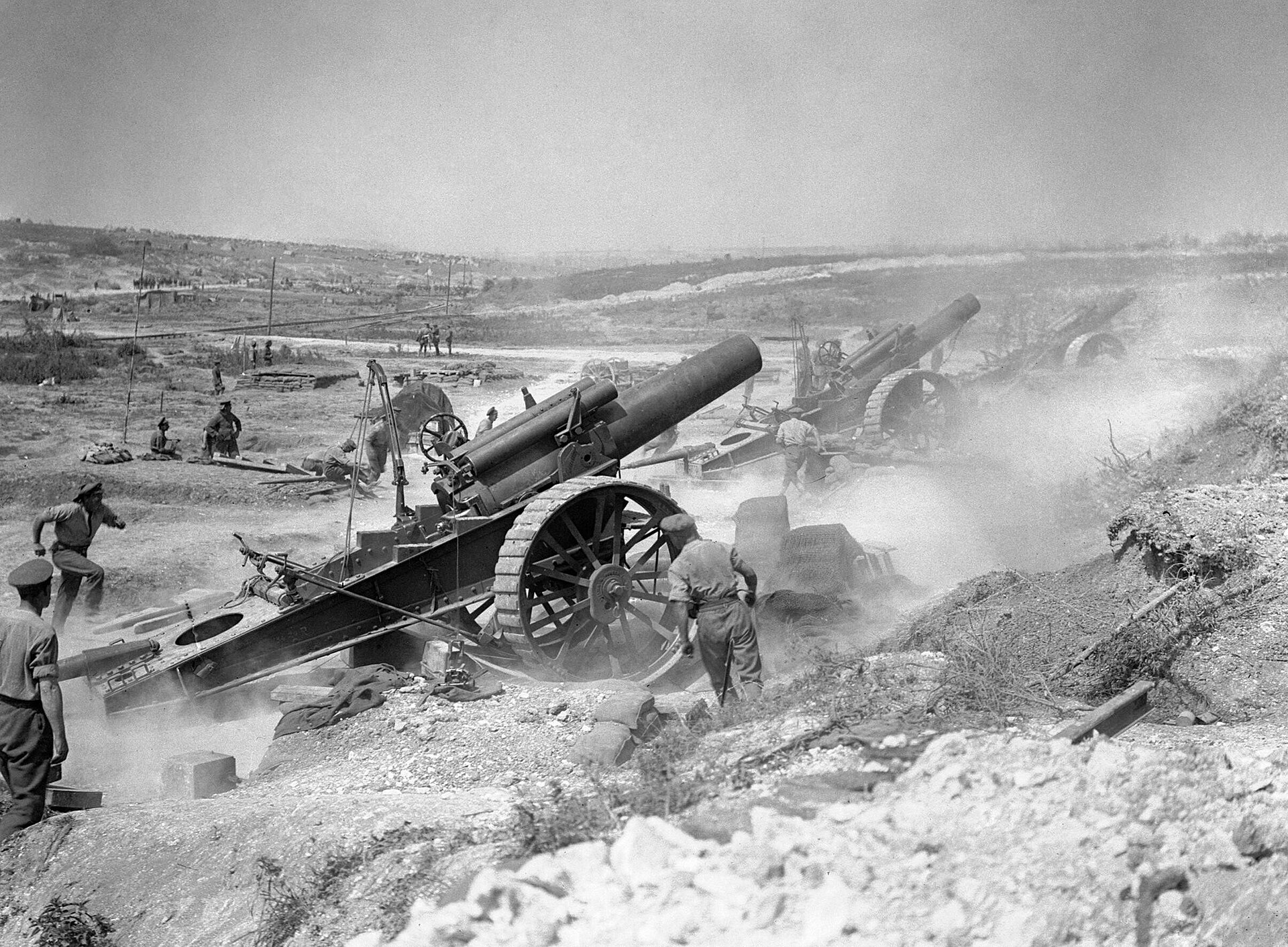
Being the Letters of Thomas Marsh-Hale, Journalist, Illegitimate Son. Three Registers: Before the War, During the War, After the War. The Archive Found.
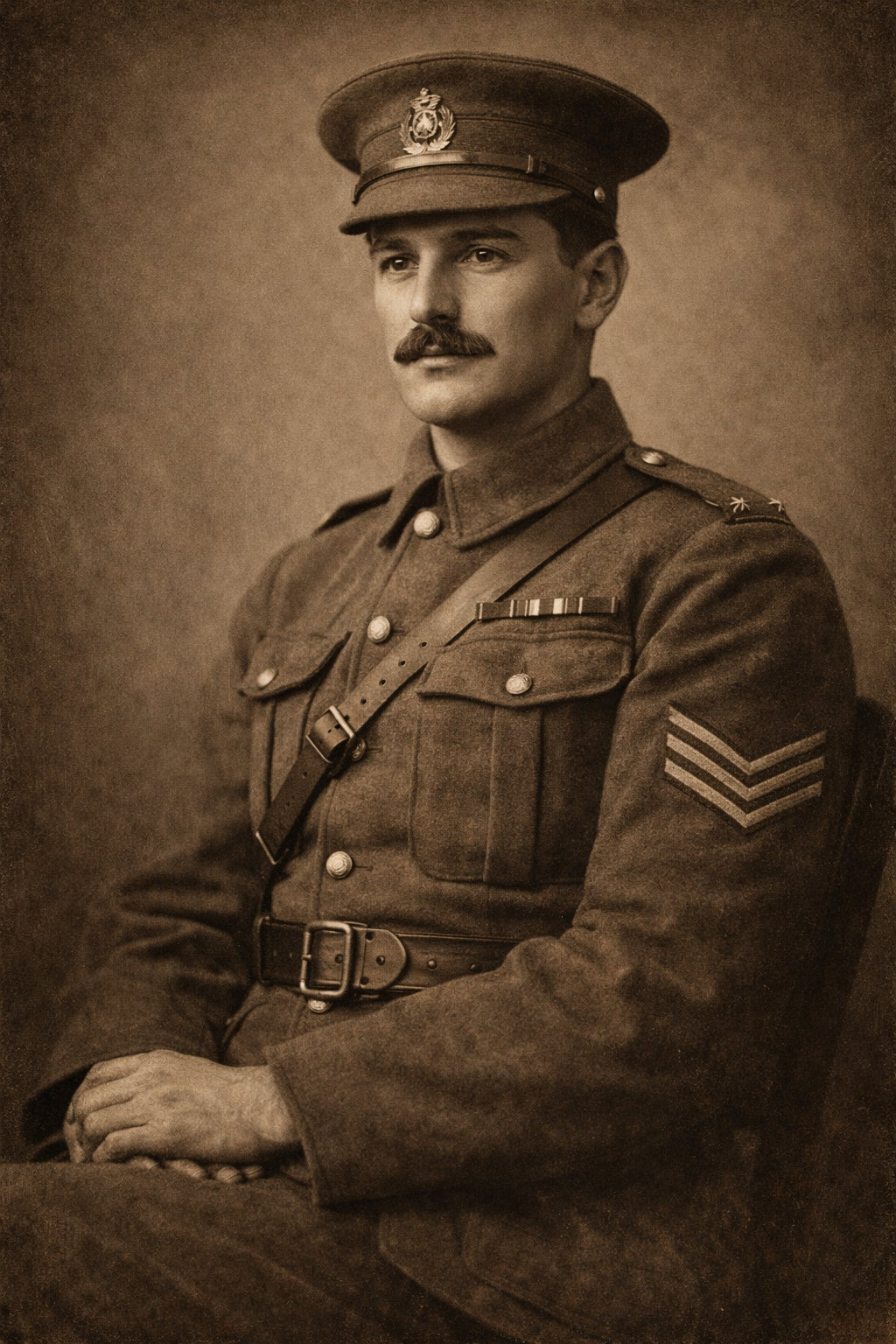
My dear Daniel — I write to you from the somewhat dispiriting surroundings of the Press Gallery, where I have spent the better part of this week in the service of reporting upon proceedings which, if recorded with perfect accuracy, would not only bore the readership into a condition of mild unconsciousness but would also, I suspect, bore several of the participants in the proceedings themselves, were they to encounter the record.
The parliamentary debate upon which I am reporting concerns, in its nominal aspect, a question of colonial administration, and in its actual aspect, a question of whether the several gentlemen making speeches wish to be understood as thinking the thing they are saying or as wishing to be seen to think it, the distinction between which I have found, in four years of parliamentary reporting, to be the only distinction that requires careful attending to, all other distinctions being matters of grammar and party affiliation and therefore essentially decorative.
I dined last Tuesday with a man who claims to have known my father, which is to say the man who was my father in the biological sense and who was, in the various other senses, a considerable question mark. He told me that Edmund Hale was a man of considerable intelligence and very little self-knowledge, which is either a kindness or an accurate description and possibly both. I find I am more interested in the family he came from than in the man himself, which is either a failure of filial imagination on my part or a reasonable instinct about where the substance of the matter lies.
Daniel — Paris in March is the cliché that the cliché was invented to describe. I will not describe it further on the grounds that anything I say will sound borrowed. I am here covering the colonial conference, which is less interesting than it sounds and sounds less interesting than anything I have covered in the past twelve months, which has included two elections, one flood, and a trial that lasted three weeks and ended in a verdict that satisfied no one, including the jury. Good journalism.
I have been thinking about the family again. Found a letter at my mother's that I hadn't read — from my grandfather Edmund to my mother, from 1880, when I was seven. He never sent it. She found it among some papers after he died and kept it without telling me, which I understand. The letter is about me. It is a man who knows what he should do and cannot do it. Watching it from the outside, from thirty years later, I find I feel more sorry for him than angry. He was not a courageous man. He had a courageous intelligence that he never attached to anything real. That is a particular kind of waste.
I think I understand the question now — the family question, is what I have done sufficient — in a way I did not when I was younger. The answer isn't a destination. It's a practice. Rachel says so too, which means she understood it before I did, which is also a practice.
Annotation in Thomas Marsh-Hale's hand: Daniel was 44 years old and they took him. He said he had as much right to fight for this country as any man born in Worcestershire, and more right than most since he'd spent twenty years defending it in the courts. The recruiting officer looked at his papers for a long time and then stamped them. I saw Daniel on the steps after. He said: well. I said: well indeed. Neither of us said anything else. We went for a drink.
Rachel — I am writing this from a farmhouse twelve miles behind the line. There is a fire. The farmer's wife is making something that smells like soup. The cat is asleep on the press bag. If I describe this too carefully it will sound like I am making it into something it isn't, so I will not describe it further.
Daniel is going to be all right. I had a letter from Adaeze on Monday. He is walking again, badly, and says he expects to walk well enough eventually. I believe him. He has always managed to do what he said he would do.
I have been thinking about the question. You know the one. I asked it at the front last week — the actual front, which I am not meant to go to but did because there are things you cannot see from twelve miles back. I asked it standing in a hole in the ground in the rain. Whether what I had done was sufficient. I did not have an answer. I do not think there is one. I think my grandmother was right that the asking is the thing and the not-stopping-asking is the other thing.
Come home. See to the pig. 🐷 I will be back in February.
I found the archive in a reading room in Oxford on a Tuesday in March, three months after the armistice. I was there to cover a conference. I had an hour to spare. I went to the Bodleian because I had not been before and it seemed like the kind of place a journalist should have been. A librarian, finding that my name was Marsh-Hale, asked me if I was connected to the family whose papers had been deposited there by a Miss Ruth Hale in 1912. I said I did not know. He showed me.
I spent four hours in that reading room. I read everything — or tried to, since much of it was Latin and much of the rest was in English I could only partly read, but I had some of the Latin from school and the feeling of the thing carried me past the parts I could not read. A family from 1066 to the present day, in their own words, in the language of each century. A question asked at the beginning and asked again in every generation.
I walked out into the High Street at seven in the evening and stood in the cold for a while. Then I went back to the hotel and wrote to Rachel. The letter was three sentences long. I told her what I had found. I told her I was all right. I told her the question was still open, which was either a comfort or a problem, and I had not decided which.
She wrote back: both. It is always both. Come home.
She was right about everything, as a general principle. She was right about this in particular. I went home.
Daniel Okafor, Gray's Inn Road, London, to Mr Samuel Okafor, Lagos
March 1890 · Daniel was nineteen, in his second year at the Inns of Court · Translated from the Yoruba greeting and closing by Dr Adaeze Okafor, 2025
Dear Father, I am writing from my rooms at Gray's Inn Road where I have been living since the autumn and which are cold in the way that English rooms are cold — not dramatic cold, not the cold of the harmattan, but a persistent damp cold that comes through the walls as though the walls were not quite closed against the outside, which in some cases they are not.
I am well. The law is difficult and interesting and I am managing it. The difficulty is not the subject, which I can follow, but the texture of it — the English law has been accumulating specific cases and precedents for six hundred years and the cases refer to each other in a way that requires you to hold a very great deal in your head simultaneously, which I am practising. I am getting better at it.
I want to tell you about the situation here, and I want to tell you accurately, because I think you understand accuracy and I do not want to perform contentment for you when contentment is not quite the word.
I am the only person who looks like me in every room I enter. This is not a complaint; it is a description. Some rooms are kind about it and some rooms are less kind and some rooms are indifferent in the way of rooms that have decided what you are before you arrive and are waiting for you to confirm it. I am learning to read which kind of room I am entering before I say anything, which is a skill I did not know I needed and which is useful in ways that go beyond this particular country.
I have made one friend. His name is Thomas Marsh-Hale and he is the son of a barrister who chose not to acknowledge him, which means he is in a different kind of difficulty from mine but a difficulty nonetheless, and he understands something about being in a room where the room has already decided what you are. We argued about John Locke last Sunday for two hours and neither of us changed our position and both of us found this satisfying, which I think is what friendship is.
London is extraordinary and exhausting and I do not think I will ever feel fully at home in it, which is not a problem — I did not come here to feel at home. I came here to learn the law, and I am learning it, and when I know it well enough I will use it, and the use I have in mind is not quite the use they are training me for, but that is a conversation for another letter.
Give my love to mother and to Taiwo. I am eating. The food is not good but there is enough of it.
Your son, Daniel. London, March 1890.
Clara Marsh — Household Account Ledger
11 Camberwell New Road · London · Week of 14–20 March 1876
Note on the boot soles: Thomas will outgrow these boots before the soles wear again. Next size up required by autumn. Begin saving for this in April.
Note on the coal: half sack is not sufficient for this weather. Full sack when the quarter payment comes. We are cold.
A cast iron cooking pot, approximately 25cm diameter, with a single handle wrapped in cracked, very old leather binding. The pot is dark with age and use, blackened at the base from centuries of fire. The leather wrapping on the handle is original — it has not been replaced in its lifetime, and its age is evident. The pot sits on a plain wooden surface.
Weight: approximately 4.5 kilograms, empty.
He kept it for forty-six years. His 1395 probate inventory lists it as: one iron pot with leather-wrapped handle, value four pence. He replaced every other pot in the kitchen as they wore out. He kept this one.
The pot appears in the 1876 Camberwell ledger as the object Thomas wrote to his aunt about in 1350. Clara kept it on the shelf above the range. Thomas took it with him when he married Rachel in 1903. It is in the Bodleian now, donated by James Marsh-Hale in 2001 with the note: this was always the most important thing in the archive.