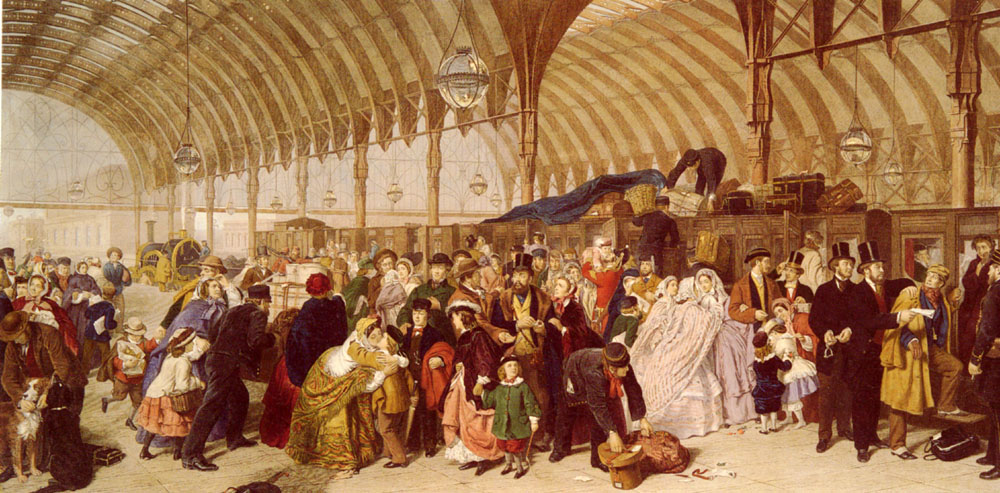
High Victorian. The performance. The letters with black borders. The diary no one was meant to read. The confession on a plain white page. The locked room in Shropshire.
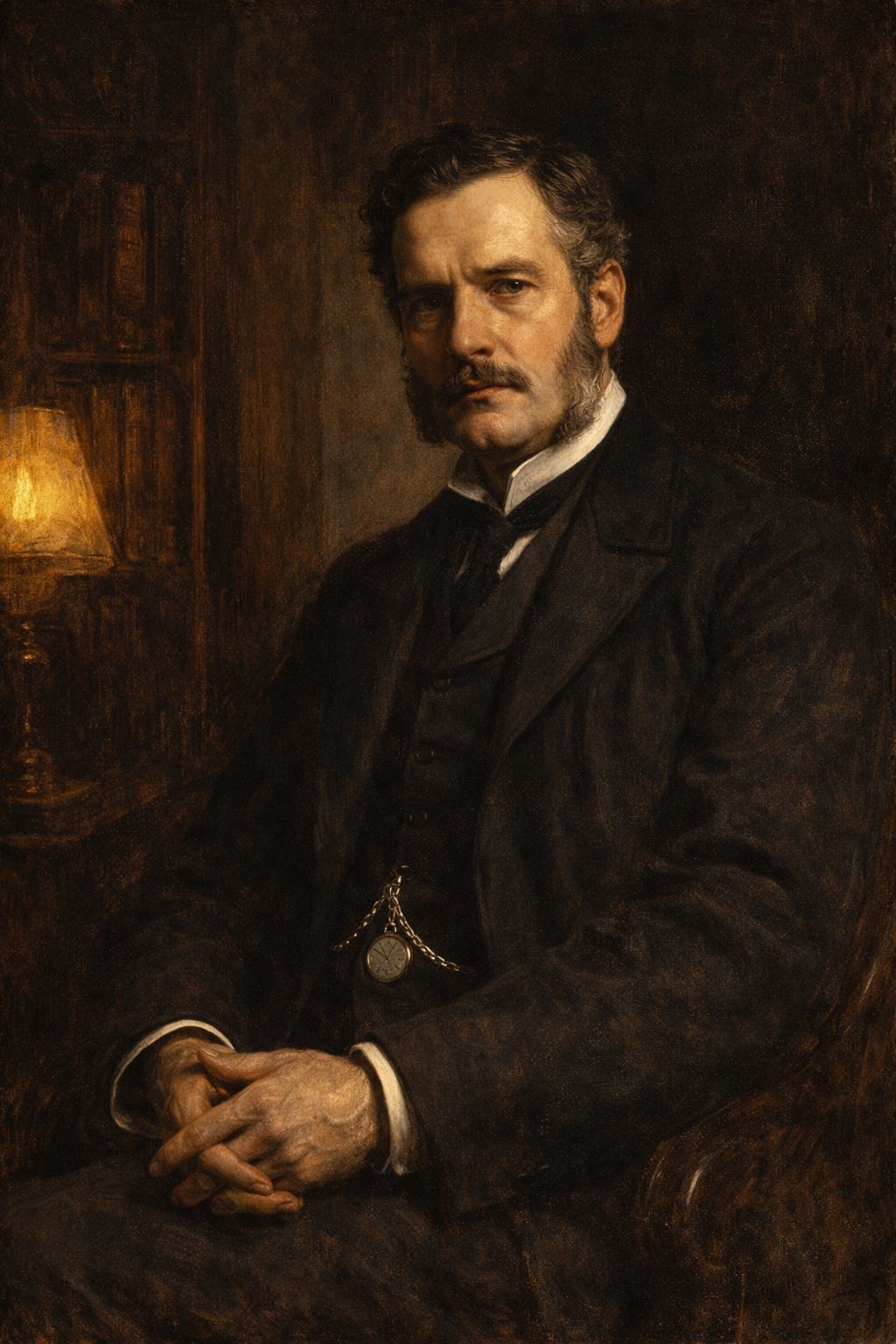
My dear Alderton — I write to you upon the matter of the timber valuation, which your letter of the ninth ultimo addresses with a thoroughness I find wholly satisfactory in its methodology and wholly dissatisfying in its conclusions, the latter being, I am afraid, a consequence of the former, since thoroughness applied to an inconvenient set of facts will produce inconvenient conclusions with a reliability that no amount of optimism can defeat.
The valuation of seven hundred pounds for the upper wood, which is the figure your surveyors have arrived at after what I must assume was a diligent examination, represents a decline of approximately one-third from the figure my father obtained in 1858, and a decline of rather more than that from the figure my aunt Augusta obtained in the year 1832, when the wood was at its most productive and when — I say this without quite the bitterness it might seem to imply — it was being managed by a woman who had no legal standing to manage it but who managed it better than anyone with legal standing to do so has managed it since.
I shall accept the offer. I find I am tired of the question, which is not the same as finding an answer to it, but which is at least a decision of a kind. Please proceed as you see fit. I shall be at Harton for the rest of this month if you require my signature upon anything.
I have discovered, through the inquiry I have been conducting for the past six months into the matter of certain papers at my great-uncle's solicitor, that I have a half-brother. His name is Thomas. He is the son of my father and a woman named Clara Marsh, who is a seamstress in Brixton, London. He is born in the year 1873 — no, I have the dates wrong; he is born this year, 1873 — wait. I have been informed that Clara Marsh is presently in confinement, which is to say the boy has not yet arrived in the world and I am already thinking of him in the past tense, which is either a philosophical habit or a moral failing and I am not certain which. The question is what to do. My father did nothing, having died before he had the opportunity to do anything or to be seen to do anything, which amounts to the same thing in terms of outcome. I am alive. I have therefore no such convenient excuse.
I have seen the boy. He is two years old and he looks like a Hale, which is to say he looks like me, which is to say he looks like my father, which is the aspect of this situation that is most impossible to manage and the one I least know what to do with. Clara Marsh is a capable woman who is raising her son with more dignity than the circumstances warrant and considerably more than my family has provided. I gave her money. I feel correctly that this is insufficient and I am not certain what the sufficient thing would be. I keep asking the question without arriving at an answer. I have been told this is a family characteristic. I begin to see what they mean.
The question that haunts the family — is what I have done sufficient? — is not, I now understand, a question about the large things. It is not a question about whether I have performed my duties, conducted my correspondence, maintained the estate, attended the appropriate occasions in appropriate attire. All of that I have done. I have done it with an elaborateness that I suspect is itself a symptom of the problem it is trying to solve. I perform sufficiency so thoroughly that I have perhaps performed in place of it. What I have not done is see to the pig. 🐷 The pig in my case is the boy in Brixton, who is five years old and has my father's eyes, and who will inherit nothing from the family that made him unless I act, which I have not acted, which is the thing I cannot stop writing down and cannot stop not doing.
Mr. Edmund Hale was found deceased on the morning of the 14th of August at the house of Colonel Whitmore in Shropshire, where he had been a guest for the preceding fortnight. He was found in the study at eleven o'clock in the morning, the door having been locked from the inside. The circumstances have been examined by the county coroner, who has returned a verdict consistent with natural causes, the precise nature of which need not be further specified here — the coroner's private notes, seen by this office, indicate a more deliberate circumstance, which the family has asked us not to record.
We have been instructed to locate and inventory the papers of the deceased in preparation for probate. Among the papers found at Harton Hall there is one document of an unusual character, which has been sealed and placed in the deed-box pending further instruction. We recommend that this document be preserved with the family papers and that its contents be treated as confidential unless the family directs otherwise.
There is also the matter of a standing arrangement with one Clara Marsh, seamstress, of Brixton, London, and her son Thomas, aged nine years — who is, in our private assessment, the natural son of the deceased, though no formal acknowledgement was ever made or signed. Mr. Hale has been making quarterly payments to this address since 1873. This arrangement is not formalised in any document we have been able to locate. We await the family's instruction as to whether it should continue.
Note added by hand, undated: Payments continued by instruction of Miss Ruth Hale (Augusta's granddaughter), who directed that the arrangement remain in place. The quarterly payments were continued accordingly.
DEATHS. — HALE. On the 14th of August, at Whitmore Park, Shropshire, EDMUND HALE, Esq., of Harton Hall, Worcestershire, in the forty-first year of his age. The last of his line in the main branch. A man of considerable attainment and wide acquaintance in the county. The estate passes to the trustees.
The funeral was held privately, at the family's request. The burial is at St. Wulfstan's, Halecroft, where the Hale family has been baptised, married, and buried since the year 1067. The stone is plain. The inscription records his name and dates and nothing else. It is consistent with his wishes as recorded.
[Cutting found in the deed-box, folded once. No annotation.]
I have been performing sufficiency my entire life and I have not once asked whether the performance was the thing itself.
The letters with the black borders. The elaborate sentences. The meetings attended, the obligations discharged, the appropriate grief expressed at appropriate intervals. I have done all of it. I have done it well. And I have done it instead of the other thing, which was simpler and which I could not manage: to go to Brixton and to say to the boy that he is mine and that I am sorry it has taken me this long and that I do not know what to do now but I am here.
I have not gone to Brixton. I have sent money, which is not the same thing, which I know is not the same thing, which I have always known is not the same thing. The money arrives on time because I am a punctual man. It is the only punctual thing I have done in this matter. Everything else has been deferred: the acknowledgement, the visit, the plain sentence that would cost nothing except the performance.
Is what I have done sufficient? I know the answer. The answer is no. The answer has always been no. I have been asking the question as though it might one day return a different result, as though the asking were a kind of action that could substitute for the action itself. It cannot. My great-great-grandmother Matilda apparently understood this. She kept the bees and wrote the letter and set down what she knew so that whoever came after would know it. I have kept the accounts and written the letters and I have not set down what I know, which is that Thomas is my brother and that I have failed him in the only way that mattered.
I am writing this because I am not going to Brixton. I know I am not going. I am writing this because someone should know that I knew what I was not doing. The knowing does not excuse the not-doing. But it is the only honest thing left.
The deceased, Mr Edmund Hale, gentleman, aged 44, was found at approximately 11 o'clock in the forenoon of Tuesday last, having been absent from breakfast without explanation. The study door was locked from within. Entry was effected by the under-butler after some two hours.
The cause of death I find to be cardiac arrest, though I note that the deceased was in apparent good health. Several letters were found upon the writing desk, addressed to persons unknown. These were sealed and have been retained by the family.
Verdict: Death by natural causes.
The letters were never delivered. Their contents are unknown. The family did not speak of the matter again. Ref. EV-J/2024
Edmund Rathbone Hale, Lincoln's Inn Fields, to Miss Clara Marsh, 11 Camberwell New Road
January 1870 · The termination letter · Not previously published in full · Original in Clara Marsh's keeping for forty-four years
Miss Marsh,
I write to you in the full awareness of the inadequacy of any written communication to the weight of the present circumstances, and I ask you to receive what follows in the spirit of a man who finds himself in a position of considerable personal difficulty which he has, perhaps, handled with insufficient attention to the feelings of those most directly affected by it.
The exigencies of my professional situation — which have developed with a rapidity I did not anticipate — make it impossible for me to continue the present arrangement with any prospect of the certainty and stability that you deserve and that I had hoped, at the commencement of it, to be able to offer. I do not think it necessary to enumerate the specific pressures that have produced this conclusion, as you are a woman of considerable intelligence and will, I believe, understand them without enumeration.
The enclosed sum — one hundred pounds — represents my sincere attempt to discharge, in such material form as is available to me, the obligations of the past three years. I have arranged for a further payment to be made to you on the same terms as before, through the firm of Alderton and Co. of Shrewsbury, which has no connection to my own chambers and which will maintain the discretion the arrangement requires. The amount is forty pounds per annum, payable quarterly.
I am sensible that this falls short of what the situation demands. I am not in a position, at the present juncture, to offer anything more substantial. I ask you to believe — though I understand you have no reason to — that the constraint is genuine and not convenient.
I am, Miss Marsh, with the deepest regret and the sincerest assurance of my continued good wishes for your welfare, your obedient servant, Edmund Rathbone Hale.
Adelaide Hale, née Ashbourne — Private Diary · Three Entries
August–September 1882 · The week in which Fairweather told her everything · Donated to the Bodleian by her descendants, 1967
Thursday. Fairweather came. He told me everything, or as close to everything as a man in his position can tell a woman in mine. It took two hours. He was uncomfortable throughout in the way of men who are performing an obligation they did not choose and who are doing so more honestly than the obligation strictly requires. I thanked him. He left.
I sat in the morning room for a considerable time after. The windows look south over the park. The park was in late summer colour. It was very fine.
I am not surprised. I want to be precise about this because I think precision matters here. I am not surprised in the sense of not having expected anything of this kind. I am surprised only in the specific detail, which is the detail of Thomas — of a child who exists, who is nine years old, who has Edmund's eyes. That detail I had not had.
Friday. I slept. I did not expect to sleep but I did. I woke in the night once and lay very still in the dark and thought: there is a nine-year-old boy in Camberwell who does not know that the woman lying awake in Derbyshire is his father's wife. I thought: he does not know and it is not his fault and it is not, precisely, mine. Then I went back to sleep.
Saturday. I have written to Edmund. I wrote three drafts and kept the fourth. The fourth says what I mean, which is: you were an extraordinarily convincing version of the man you were not. And then it says the harder thing, which is: I do not believe the performance was without sincerity. I believe you wished to be that man. I find this, in the final accounting, the most sorrowful thing about the entire affair.
I mean it. I mean the sorrowful. Not the anger, which is also there and which I have filed. The sorrowful is the part I am keeping. He tried to be better than he was, and the trying was real, and it was not sufficient, and I loved him for the trying, which is the worst of it.
E. Rathbone, 14 Harbour View Terrace, Bristol, to Thomas Marsh-Hale, Brixton
October 1891 · Thomas was eighteen · The only surviving letter from Edmund Hale to his son · Not previously published
Thomas,
I do not know if you will read this. I am going to write it as if you will.
I am living in Bristol, where I have been for nine years, under the name Rathbone which is my mother's name and which I had some right to and which allows me to be, in this city, a man with no notable history. I am a copying clerk. I am good at it. It requires no performance of self, only of handwriting, at which I have always been competent.
I came to Camberwell in October 1882 and your mother let me in, which she did not have to, and I met you, which I had not done, and you looked at me across the room with the expression of a nine-year-old boy who has been told something about a person and is now measuring the telling against the person, and the person was not quite what the telling had suggested, in what direction I could not determine.
What I want to say — and I have been trying to find the right form for this for nine years, which is why it has taken nine years — is this: you are not the consequence of a mistake. You are the consequence of something real that I handled badly. The real thing was real. Your mother knows this and has, I think, always known it, and has raised you with it rather than without it, which was generous and which I did not deserve.
The name you carry — Marsh-Hale — is the accurate name. You are both things. You are more Hale than I was, which your mother told me and which I believe. You are whatever you have made yourself in eighteen years, without any assistance from me, and I have no claim on any of it.
I have one thing to tell you about the family you come from, the Hale part of it. They have been keeping land in Worcestershire since 1067 and they have been asking, for all of that time, whether what they have done is sufficient. None of them have answered it cleanly. All of them have kept asking. This is, apparently, what the family does. You have been doing it since you were twelve years old, which your mother told me and which I believe also.
Keep asking.
E. Rathbone. Bristol, October 1891.
A Victorian writing desk with a hinged flap — the flap is closed. The lock plate is polished bright at the keyhole from daily use. The key is in the lock, not quite turned — visible, accessible, but the flap remains shut. The desk is in a room that is orderly, the surface clear except for the desk itself and a single pen resting beside the inkwell. The room feels like a performance of order.
When the flap opens: the compartments and drawers are visible. Most contain innocuous items — pen, seal, inkwell, blank paper. One compartment holds a folded bundle of letters tied with ribbon, clearly kept carefully. Clara's letters. All of them. He kept all of them.
The letters unfold. The first one is Clara's letter of January 1877 — the one that tells him about Thomas. He received it and did not reply. He put it in the bundle. He tied the ribbon.
He did this nine more times over five years — received a letter, read it, placed it in the bundle, retied the ribbon. Each one told him something he could not bear to act on. He kept them because throwing them away would have required admitting they existed.
You have read it.
I want to be clear with you. I knew you would, eventually. That is why I wrote it — not for me, not for Clara, not for Thomas. For whoever came here, to this box, to this page, in whatever year this is.
The letters the Coroner mentioned. The sealed ones. I wrote seven of them that morning. Three were to Alderton & Sons regarding the trust arrangements. One was to Adelaide. One was to the College. Two were to Thomas.
I did not send any of them.
I sealed them and left them on the desk because I could not decide whether to send them, and then the moment passed in which one could still send them, and then they were simply there — which was, I understood, a kind of answer in itself. The Coroner's note said several letters were found upon the writing desk, addressed to persons unknown. He was wrong about unknown. He was right about everything else.
You want to know what I said to Thomas.
I told him that the money was his and the house was his and that he should take the name if he wanted it, which was mine to give, which I should have given twelve years earlier. I told him I was sorry, which is not enough, but which was all I had and which I had not managed to say in forty-four years of being a man who paid his obligations on time.
I told him he was not a circumstance. I told him he was a person. I had been aware of this since 1870. I did not say so until that morning, in a letter I addressed and sealed and then held for two hours and then burned in the grate.
I burned them because I could not bear for the Coroner to read them. I understand that this was, once again, choosing the performance over the other thing. I am aware of the irony.
You are reading this instead.
The archive has my letters. It does not have those two. If Thomas ever came to know what they contained, it was not through me.
I do not know if this constitutes honesty or its precise opposite. I have been asking that question since January of 1870 and I have not arrived at an answer I can stand behind.
I am aware that this is not sufficient.
I am aware that I know this.