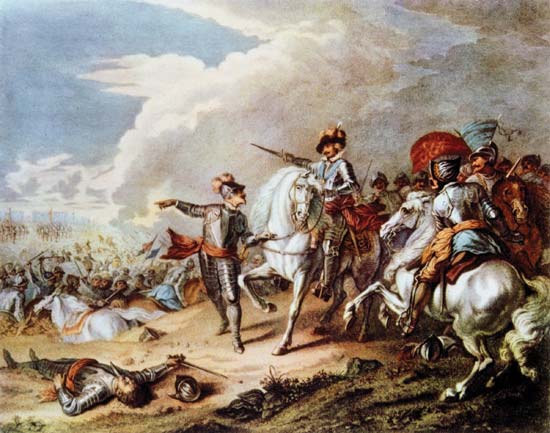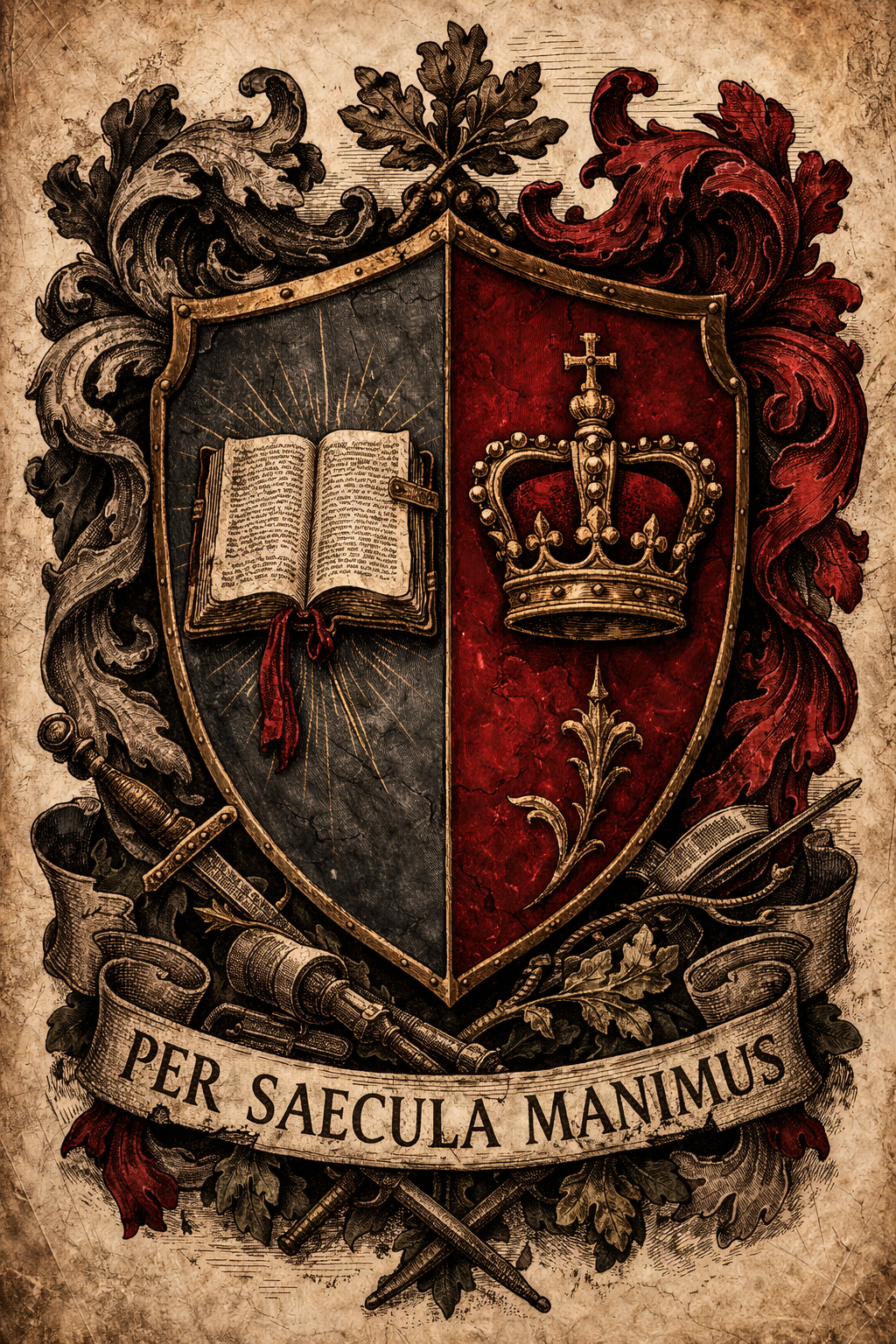
Being the Correspondence of John Hale and Thomas Hale, Brothers, Written During the Years of the Civil War Between the Parliament and the Crown. Two Brothers. Opposite Sides. Eleven Letters.
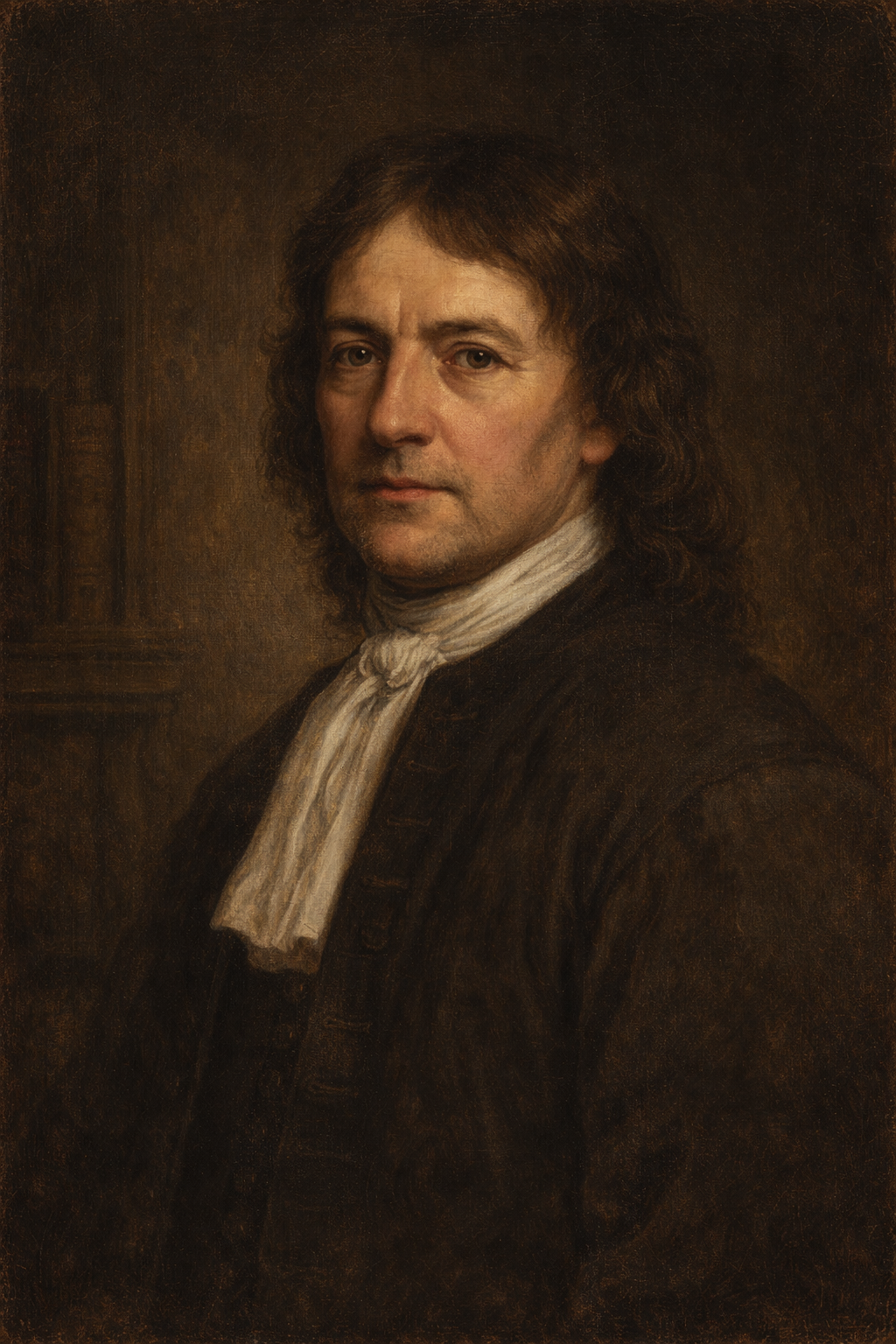
Brother Thomas — I write from Gloucester where we have been these three weeks, and I will not pretend to you that it is easy. The men are brave but they are also cold and hungry and the supply from Bristol has twice been intercepted on the road, which tells you something about the state of the country between here and there. We are managing. That is the most I can say for it.
I have your letter of the 4th, which found me eventually. You write that you think I am on the wrong side of this question. I have thought about that word — wrong — with more care than you might expect, and I will say only this: I think the Parliament is right about the law, and I think the King is right about certain matters of feeling, and I think that when those two things come apart and cannot be reconciled, you get a war. We have a war. You and I, who grew up in the same house and who know what the other one thinks before he says it, are standing on different sides of it, which should tell us something about how completely this has divided England, if we did not already know.
I am not going to tell you to come over to Parliament's side. I know you won't. I am going to ask you to keep yourself whole if you can, because when this is over — and it will be over, and one side will have won and the other will have lost and neither will have been entirely right — there will still be Halecroft, and it will need men who remember what it was before.
Tell me where you are, if you can do so safely. I think of you more often than is useful.
Brother — I have your letter of October, received last week by a route I shall not describe. You are well and thinking clearly, which is more than I can say for half the gentlemen on this side of the argument. The King's councillors at Oxford are engaged in a competition to see which of them can be most brilliantly wrong about the fastest number of subjects. I find this less encouraging than perhaps I should.
You write that you think the Parliament is right about the law. I do not dispute it. The Parliament is often right about the law. The question I cannot get past is this: what is the law for, if not to uphold the order that makes law possible? Strip away the King and what governs the governors? The Parliament says: the Parliament. And who governs the Parliament? The Parliament says: the people. And the people says what, precisely? The people says what the loudest man in the room says they say, in my observation.
I am not fighting for the King because he is right. I am fighting for him because what replaces a King — if it is only the will of the strongest — is worse. I may be wrong. I expect I shall find out.
Major Harley has lost his leg at the ford, which is a bad business. He bore it as you would expect him to. He asks to be remembered to anyone who remembers him. I told him you would. Keep yourself whole. William writes that Halecroft is still standing and the pigs are fat, which is as much as we can ask for. 🐷
To Colonel Oakes — Sir, I write in haste from the field. The enemy is broken. The King's horse fled north and his foot surrendered by four o'clock. It is over, in the sense that a battle is over. What comes after is another question.
I have not heard from my brother Thomas since February. I do not know which side of the field he stood on today, or whether he stood at all. I ask you, sir, as a personal matter, to make what inquiry you can. He is an Ensign in Lord Wilmot's horse, or was when last I knew. He is my brother. The rest of it — the side, the standard, the argument — I am prepared to set aside for the purpose of knowing that he is alive.
We have what we came for. I find I do not know exactly what to do with that. I expect I will learn.
Note added in margin, undated: Thomas was alive. He had ridden north with Wilmot. He wrote from Scotland in August. The handwriting was his.
CONSIDER: that God hath brought low the great ones of this earth, and hath done it through the hands of plain men who feared Him more than they feared princes. This is not an accident of history. This is a purpose.
CONSIDER: that the land of England is held at this moment by those who hold it in trust, not in perpetuity. Every acre is lent. Every lordship is provisional. The man who tills the field and fears God hath as much right before heaven as the man who holds the deed.
CONSIDER FINALLY: that the question which every godly man must ask himself is not "what am I permitted?" but "what is required of me?" This question hath no comfortable answer. It never had. The comfortable answers are all wrong. Ask the uncomfortable one and act upon it as best you can, and trust that God sees the difference between a man who tried and a man who did not.
No printer named. Circulated in the county of Worcester, c. 1647–1649. Found in the deed-box. No annotation.
Brother John — The King is coming home. I write this from Worcester, which is a city that remembers what it cost us, and I find I am not certain what I feel about it. I thought I would feel vindicated. I feel tired. I feel that eighteen years is a long time to be right about something that cost this much.
I want to say something to you that I have not been able to say in a letter during a war, which is: I do not think you were wrong. I think you were fighting for something that mattered. I think the thing you were fighting for was not exactly the thing that won, and the thing I was fighting for was not exactly the thing that is coming back. Both sides did things in the name of their principles that their principles do not justify. Both sides know this. Neither side has said it plainly, which is a pity, because it is the only true thing left to say.
We kept Halecroft. William kept it. Our brother, who fought for neither of us and kept the land warm for whoever came home — he is the one who held the thing together. I think we owe him more than we have ever said.
Come home when you can. There is apparently still a pig that needs seeing to.
I William Hale of Halecroft in the county of Worcester do hereby declare upon my oath that I have at all times during the late unhappy dissensions maintained my loyalty to the lawful government of this kingdom, that I have paid such taxes and assessments as were lawfully due under each successive administration, that I have harboured no conspirators and sheltered no traitors, and that it is my intention henceforward to live peaceably under His Majesty King Charles II, to whose restoration I give thanks to God and to those whose efforts have brought it about.
I further declare that both my brothers John Hale and Thomas Hale, who served in arms on opposite sides of the recent conflict, are men of honest conviction and loyal character, and I commend them both to His Majesty's mercy and the county's forbearance. They were, in my judgment, both wrong in some things and right in others, which is the condition of most men who fight for anything.
William Hale the Youngest — His Account Book · Nine Annual Entries
Copied by Robert Hale c.1700 from his father's original · With the note: my father's war, in his words
1642. Cold spring. East field ploughed late. John rode to Gloucester the seventh of August. Thomas rode to Worcester the same week in the other direction. Father sat with the deed-box. I brought him bread. The harvest was adequate.
1643. Wet summer. Mill wheel cracked at the east bearing. I repaired it myself with Ulfric's help, three days. There was a battle at Newbury in September. I do not know if my brothers were in it. The harvest was poor.
1644. The armies came through the south field in March, Parliamentary forces, and did not burn anything but took six sheep which I recorded and which were not returned. The harvest was tolerably good. I have not heard from either brother since October last. Father is in health but quieter than he was.
1645. Thomas came home in July from Oxford. He is thin. He did not speak much for a month. He saw to the east field without being asked. This was worth noting.
1646. John came home in the autumn. He and Thomas sat up all night and I do not know what was said. In the morning they wrote a letter together about the mill stream. This was also worth noting. The harvest was good. Father is not well.
1647. Father died in March. He had been failing since the winter. He said, near the end, that he did not know which of his sons was right and that this had been the hardest thing of his life, which I believe. He left the estate to me in trust for the family, which is what he had always said he would do. I saw to the burial. It was a cold day. John and Thomas were both present.
1648. The second war began and ended. John served and came back. Thomas did not serve. I ploughed both fields and bought two new ewes and repaired the granary roof. The harvest was very good.
1649. The King is dead. I wrote this down and then sat with it for a while. The land is here. The mill is turning. I do not know what England is now.
1651. The battle was at Worcester in September and part of it came through the south field, Parliamentary forces again, and damaged the gate and the near fence. I negotiated with the commander, a man named Fletcher, and showed him the deed-box and the instruments of title and he left the house standing. The harvest was interrupted but adequate. John and Thomas are both alive. This is sufficient.
Robert Hale of the Hale — Account Book · The January Page in Full
Worcestershire Record Office · fol. 47r · Reproduced here with surrounding entries for the first time
December 1648. Paid to Matthew the carpenter for work on the north barn door, four shillings. Received from Goodman Saewin for his Michaelmas quarter, twelve shillings, being the full amount. Ewes counted at last shearing: fourteen. Wheat in the upper granary: sufficient. Coal purchased from the Worcester merchant, two loads. John returned from the army the fourteenth. He is well but changed. He ate three dinners the first evening without appearing to notice.
January 1649. The King is dead. January 1649. God have mercy on us all.
February 1649. Paid to Father Anselm for masses said in this parish, two shillings. Received from the home tenant for the January quarter, eight shillings, four pence short of the full amount, the remainder to be paid at Lady Day, the tenant having had sickness in his household. Granted. Thomas came in the second week and sat with John for an afternoon. They were quiet. I did not ask. The ewes are in good health. The east field will want attention before ploughing.
A small leather-bound household account book, opened to a specific page. The entries above and below are in the normal columnar format of a careful farm accountant — items, amounts, running totals. Dense, practical, regular.
The January 1649 entry is three lines. One blank line before it. One blank line after. Every other entry in this book occupies the full column. Robert Hale set this one apart deliberately. He wrote it in a slightly heavier hand — as if pressing harder. Then he left it alone and resumed the February accounts as if nothing had changed.
The blank line above the entry: if you hold the page at an angle to the light, there is a slight impression in the paper — as if a pen rested there, or a finger pressed down, or the writer paused for a long time before beginning.
William the Youngest's account book for the same year reads: The King is dead. I wrote this down and then sat with it for a while. The land is here. The mill is turning. I do not know what England is now.
They were thirty miles apart when they wrote it. Neither knew the other was writing.