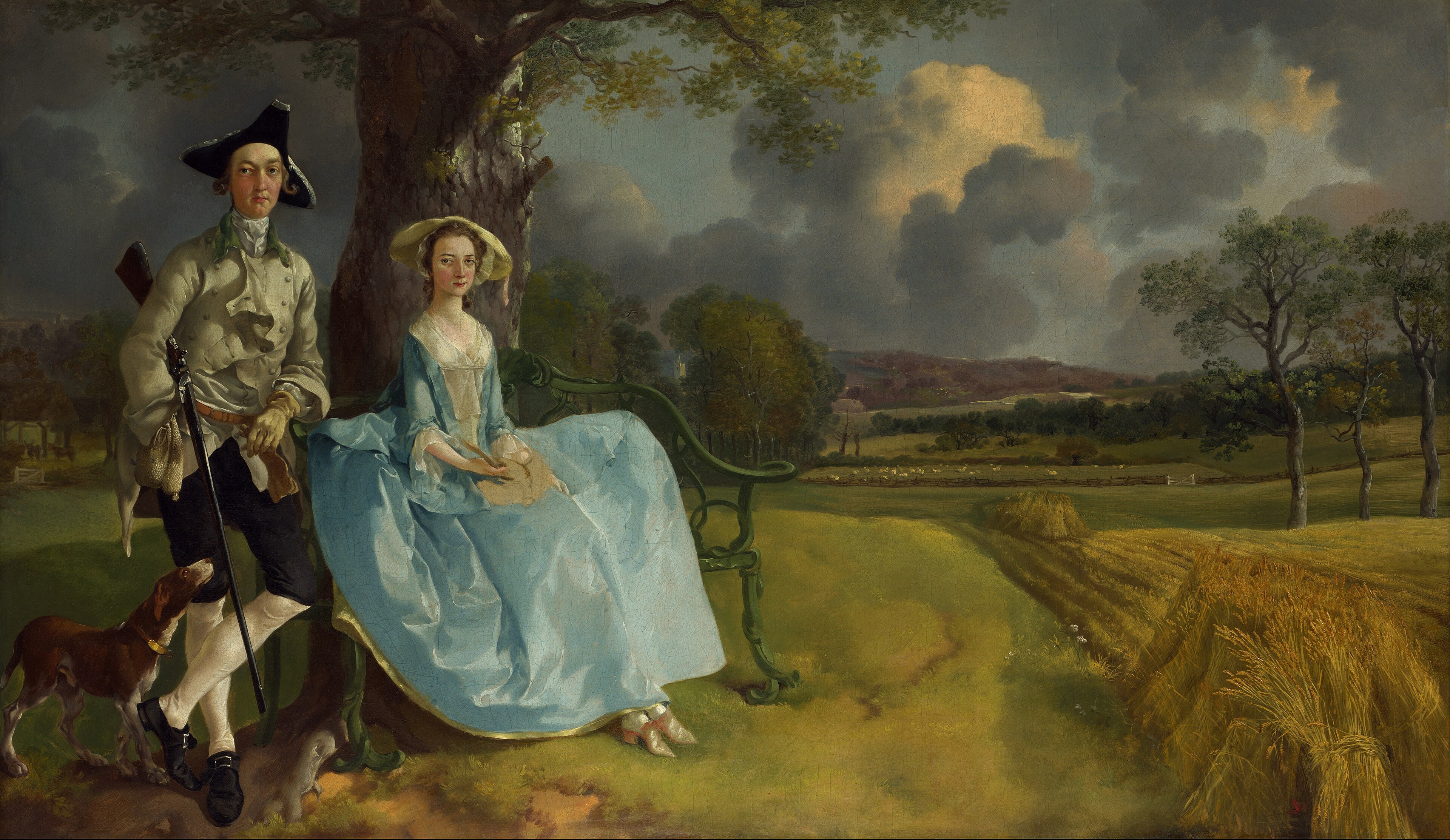
of Worcestershire and later of London; Baronet; a Man Who Had Opinions and the Stamina to Express Them
Dictated by Sir Nathaniel Hale to his secretary Mr. James Croft
in the years 1738–1744. Printed posthumously, London, 1746.
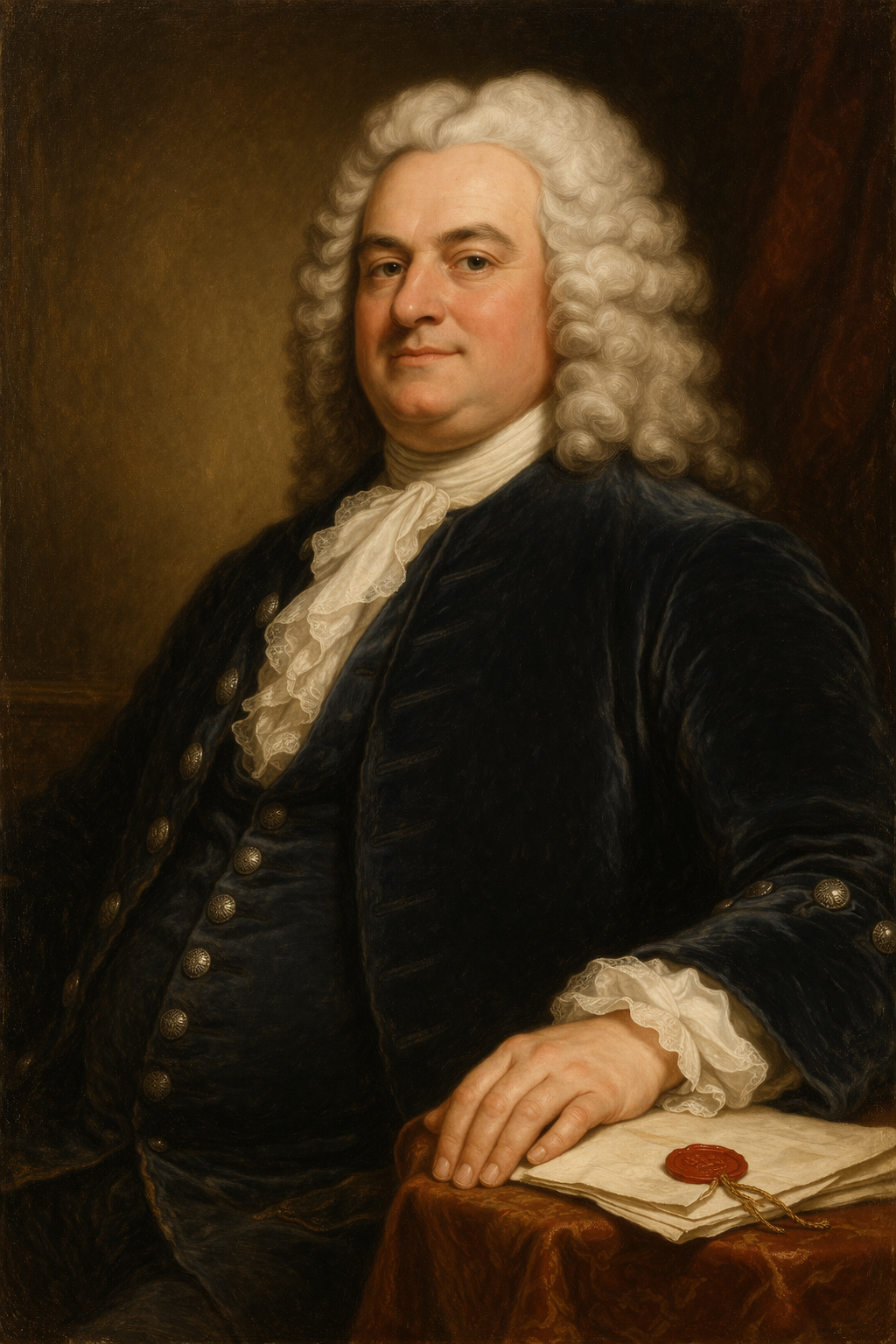
I was born in the year 1671 at Halecroft in Worcestershire, which is a village of no particular distinction, and I was the second son of William Hale, gentleman, who was the second son of Thomas Hale who fought for the King and the eldest son of the Thomas Hale who survived the plague, which makes me the fifth Hale of Halecroft in direct descent from the Norman soldier who rode into the county in 1067 and announced himself as the new owner. This is a fact about which I have always been entirely candid, because there is no dignity in pretending that one's family did not begin somewhere, and a great deal of foolishness in the pretending. We began as a soldier who took a war prize. So did half the families in England. The other half began as the people the soldiers took the war prizes from, and some of them are now the same people. This is what six centuries looks like from the inside.
My father William was a quiet man who managed the estate with great competence and very little fuss. My uncle Thomas, who had been in the King's army during the war, was a loud man who managed nothing in particular but who had opinions about everything, which he shared freely and at length. Between the two of them I learned two things: that competence is worth more than confidence, and that confidence is worth more than it ought to be in the short term. I have applied both lessons throughout my life, sometimes simultaneously, which is either wisdom or hypocrisy, and I have never been entirely certain which.
I left Worcestershire for London in the year 1698, which was the year my elder brother Edmund died of a fever and the year I received his inheritance. I did not wait for a decent interval. I said to my mother: Edmund would have told me to go. She said: yes, he would, but he would also have told you to write more often than you will. I have written as often as I could manage, which is not as often as she deserved. This is the first thing I regret.
In the year 1702, I purchased a baronetcy. I paid six hundred pounds for it, which was the going rate and which I will not pretend was money well spent in any conventional sense, but which was money spent for a particular purpose, and that purpose was accomplished. The purpose was this: that the name Hale, which my family had carried for six hundred years as a respectable name but not a distinguished one, should henceforward have something attached to it that the world would notice before it decided to ignore it. I do not value titles for their own sake. I value what they do, which is to cause people to listen before they have decided not to. This is a small thing. It is also, in practice, a considerable one.
Young Croft asks me, at this point in the dictation, whether I am not embarrassed by the nakedness of this calculation. I am not. I was embarrassed once, when I was young, about many things that did not deserve embarrassment. I have used up all my embarrassment on those things and have none left for anything honest. Buying a baronetcy is perfectly honest. You want the thing, you have the money, you pay for it. What is the alternative? Pretending you don't want it and then obtaining it by some more circuitous route that takes twice as long and costs three times as much in favours owed? I have observed that method practised by men who consider themselves more refined than I am. It looks considerably worse from the outside.
My son Edmund — who is thirteen and already possessed of the family habit of asking inconvenient questions at inconvenient moments — asked me whether a title could be bought, what was it worth? I told him: precisely what you make of it, which is also true of a name, and a face, and a set of principles, all of which things you also did not purchase but merely inherited. He thought about this for a moment and then said: then the buying of it is no different from the inheriting of it. I said: you have understood exactly. He looked mildly dissatisfied with this conclusion, which is the correct response.
Edmund — I write from London, which is where I generally write from, though I am told by my physician that I ought to be at Halecroft, which is where I will die, and which I am in no hurry to reach. The journey is seven hours in a reasonable coach and I find that seven hours of contemplating one's own death is more than sufficient. Two hours would answer. But the road does not shorten itself for philosophical preference.
I want to say something to you that I have not been able to say in conversation, partly because you are twenty-seven and twenty-seven is an age at which a man does not listen to his father, and partly because I am seventy and seventy is an age at which a father has run out of ways to make his point without sounding as though he is making his will. I am making my will separately. This is something else.
Our family has been asking a question for six hundred years. Whether what we have done is sufficient. Whether the holding of a thing — the land, the name, the account of what happened — constitutes an answer to the question of whether we deserve to hold it. I do not think it does. I think the answer is in the asking, and the asking is never finished, which is either very satisfying or very exhausting depending on the day.
You are a good man. You are better than I was at your age, which is not a high bar, but it is a true one. You will ask the question. I am confident of that. See that you do not stop asking it when the answer becomes inconvenient, which is the only moment the question matters.
See to the pig. 🐷 You know what I mean.
Dorothea Hale, née Fenwick, to her Sister Lady Catherine Pemberton
Written November 1721, one year after the South Sea Bubble · Not previously published · Found in the Pemberton family papers, Cumbria Archive
Catherine, I write privately and ask you to burn this when you have read it, which I know you will not do because you never burn anything, but I ask it anyway because what follows is what I actually think and I am usually careful about who hears that.
The money is substantially gone. Not entirely — Nathaniel did not mortgage the land, which is the single act of financial discipline in his life for which I am unreservedly grateful, and which he maintained against considerable temptation at several points. But the London properties are sold, the counting-house is closed, and we are in the position of people who were prosperous and are now comfortable, which is a position I find I can manage without distress, though I confess the comfort has a different texture than the prosperity.
You will ask what I think of him. I shall tell you, and I ask you to receive it as the considered judgment of a woman who has had twenty years to form it rather than the complaint of a woman who is presently aggrieved, which I am not, precisely.
I married a man who was building something, and what he was building required materials that a man of strict probity would not have used, and I knew this when I married him. I knew the building was constructed partly of things that would not survive close examination. What I did not fully understand — what I think I underestimated — is the cost of living inside a structure whose foundations you cannot examine.
He is not a bad man. He is a man who made himself, by effort of will, into the man the situation required, and who has been maintaining that construction for thirty years, and who is, I suspect, rather more tired than he will ever say. The Bubble was not the cause of his exhaustion; it was the occasion of its becoming visible. When I found him in the morning room with the accounts he looked, for the first time in twenty years, like what he actually is, which is a man of considerable intelligence and genuine feeling who has been performing competence since he was fourteen years old.
I said: then we have sufficient to begin again. I meant it entirely. What I did not say, and what I mean equally: I am rather looking forward to the beginning again. The performance was accomplished, but it was also tiring to watch.
Burn this, Catherine. Or don't. You never do.
Your loving sister, Dorothea. Hale Court, November 1721.
My father was a man who believed that the self was prior to the performance — that there existed, beneath all one said and did and appeared to be, a fixed and inalienable essence which the performance either revealed or concealed, and which constituted the real man. He held this belief with the quiet conviction of someone who has never had occasion to doubt it. He was, in this, fortunate.
I do not share the belief. I have spent sixty years being unable to share it, not from philosophy but from observation: I have looked, repeatedly and with considerable attention, for the fixed essence beneath my performance, and I have found nothing but further performance, each layer removed revealing another layer, until I arrived at the conclusion that there is no layer beneath — that the performance, conducted with sufficient conviction across sufficient time, does not conceal a self but constitutes one.
My father would find this terrifying. He would find it, in fact, the most terrifying thing I could say about myself — more terrifying than the South Sea losses, more terrifying than the baronetcy's purchase price. He believed that a man without a fixed self was not a man at all but a kind of absence shaped like one.
I believe he was wrong. I believe he was wrong in the specific way of a man who has never been required to make himself — who received himself as a given, unchanged from birth to death, and mistook the consistency of the gift for evidence of its metaphysical status. I made myself. The making was effortful and not always honest and produced, in the end, something that Francis inhabits as if it were natural — as if he were born to it — which, in a sense, he was.
That is what I burned for. Not for my own vindication, which I am past needing, but for his. So that what he is would not have to account for how it was made.
A printed broadside on cream paper, showing the South Sea Company's June 1720 notice to proprietors. The text announces in large capitals that stock stands at ONE THOUSAND AND FIFTY POUNDS per share. The formal language of a firm that expects to continue indefinitely.
In the right margin, in a handwritten annotation immediately recognisable as Nathaniel Hale's hand from comparison with his letters: I bought at 800. I sold at 400. I am, by this calculation, what is vulgarly called ruined.
Beneath the fold, previously hidden: a second annotation. Smaller. Written later — the ink is slightly different, a touch darker.
And yet. The house is here. Dorothea said: then we have sufficient to begin again. She was right, as usual. I have been ruined twice before and rebuilt once. I expect the mathematics of the third time will be familiar.