MSS. Hale-Marsh · Estate Record · Halecroft, Worcestershire

Halecroft

The family seat. Held continuously since 1067.

Nine centuries in a single place. Every generation of the Hale dynasty has been born, married, and buried within reach of this ground. The buildings have changed with every era — timber to stone, hall to manor, manor to hospital and back again — but the land beneath has never left the family. What follows is the record of those changes, from the first stake driven into Worcestershire soil in the winter of 1067 to the present day.

52°04′N 2°22′W · Worcestershire, England
Use This Page For
Seeing the estate itself as a character: how the house changes, contracts, survives, and remembers the line that keeps returning to it.
Best After
Vol. I or the map, once Halecroft already matters to you as more than a place name in the documents.
Where Next
Read the corresponding volume links through the estate timeline, then use the map to see how Halecroft sits among the wider family lands.
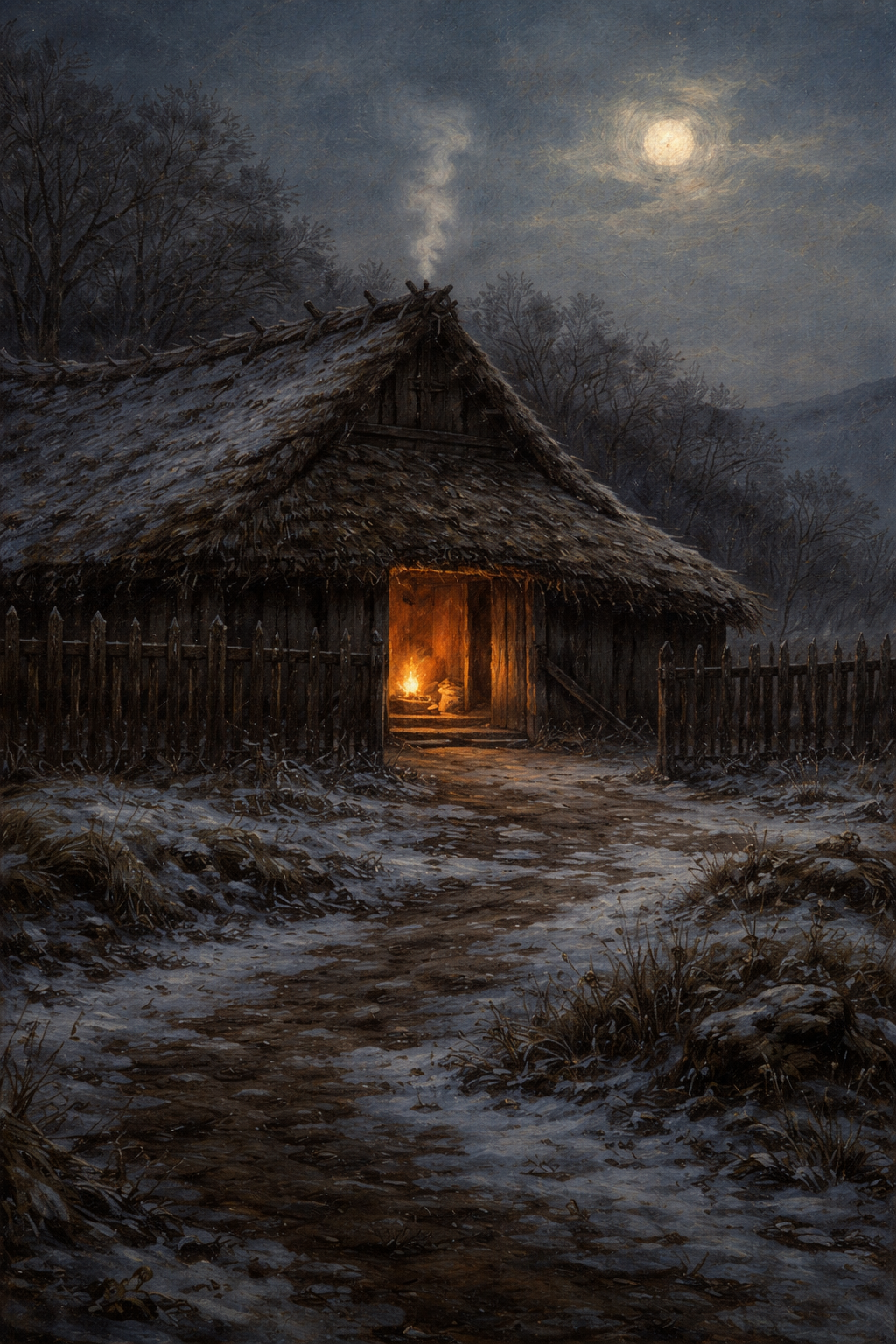
Halecroft, 1067 — Norman timber hall
Era I · Norman
1067
The First Hall

Ranulf de la Hale received the land from William I in the winter following the Conquest. Within the year he had raised a timber hall — three rooms, a great hearth, a storehouse. Not grand. Practical. A statement of arrival.

What was built
Timber hall, thatched. One storey. A palisade of oak stakes marking the boundary. The well dug by Saxon hands Ranulf had retained. He named the place for the hollow — hale, in the old tongue. The hollow in the hills.
Read Volume I →
Era II · Plague
1349
The Sealed House

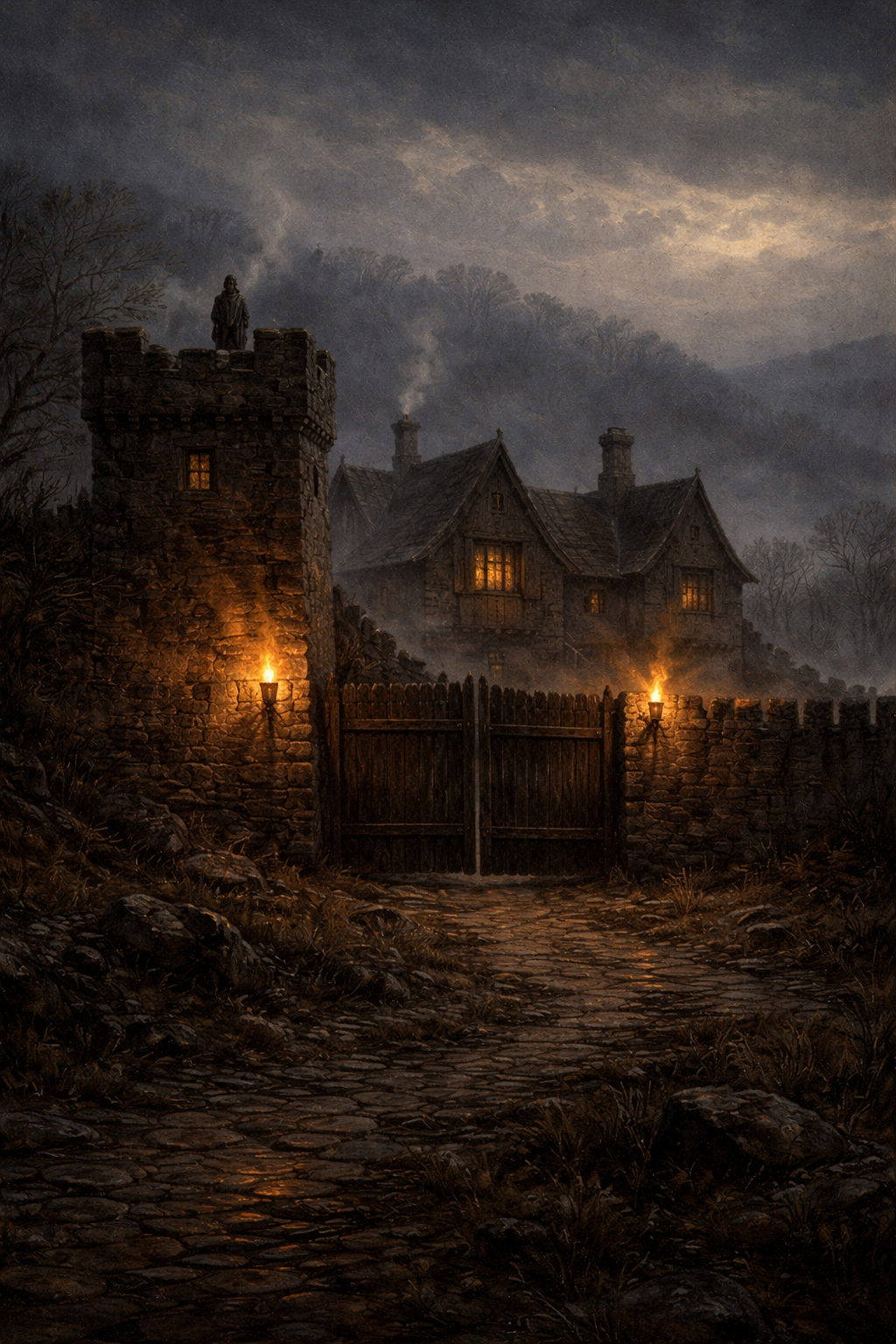
When the plague reached Worcestershire in the autumn of 1348, Thomas Hale sealed the gates and posted armed men on every approach. No one was permitted in or out for eleven months. Three of the household died within.

What changed
The original timber hall was partially dismantled and a small stone undercroft dug beneath the east end — the first permanent masonry on the site. Used to store food during the siege. It remains, still accessible, beneath the present east wing.
Read Volume II →
Halecroft during the plague, 1349
Halecroft Tudor manor, c. 1550
Era III · Tudor
1541
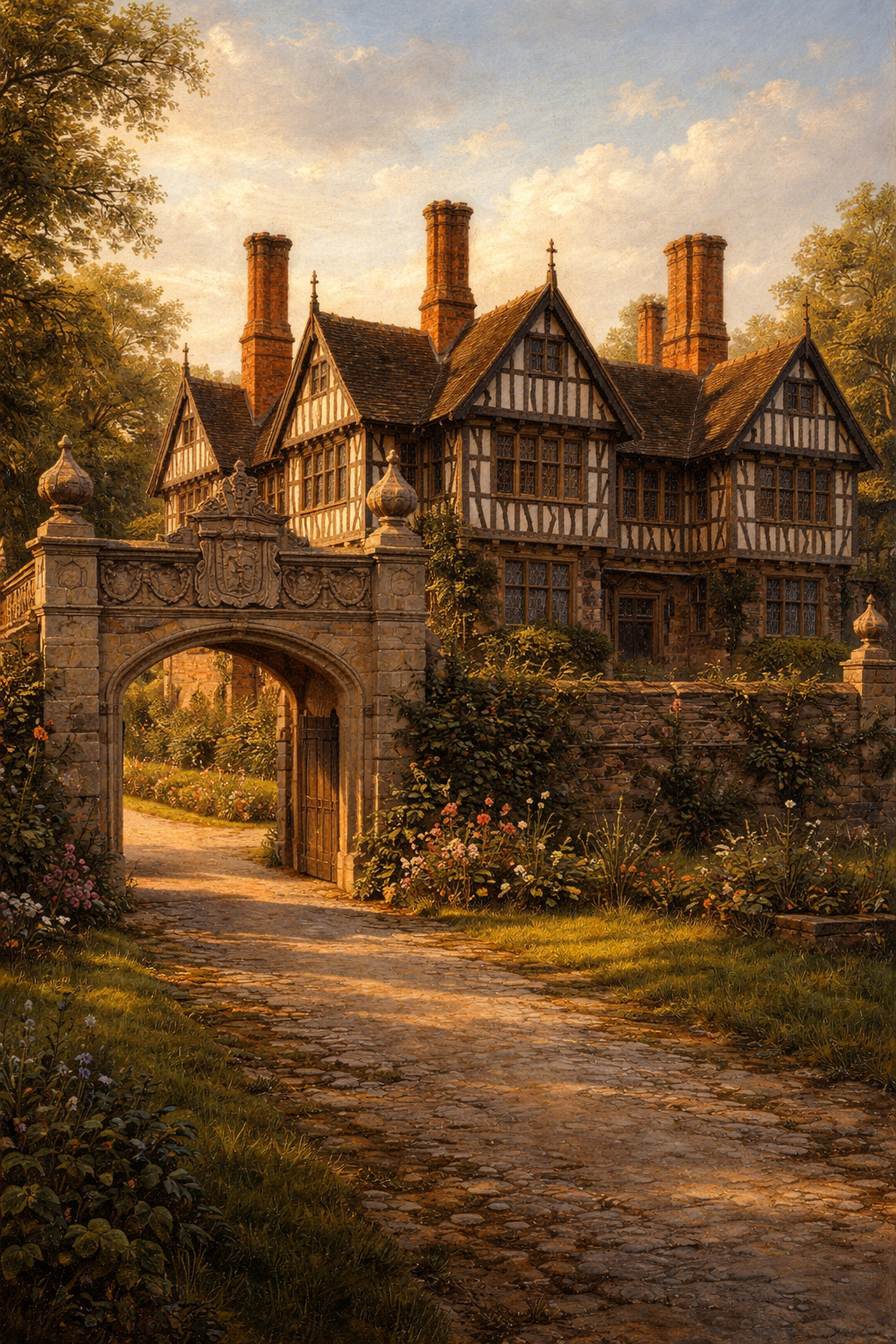
The Stone Expansion

Sir William Hale, freshly returned from court with a knighthood and a fortune in wool, commissioned a full rebuilding of the estate in stone. The old timber hall was demolished. In its place rose the house that would, in essence, survive to the present day.

What was built
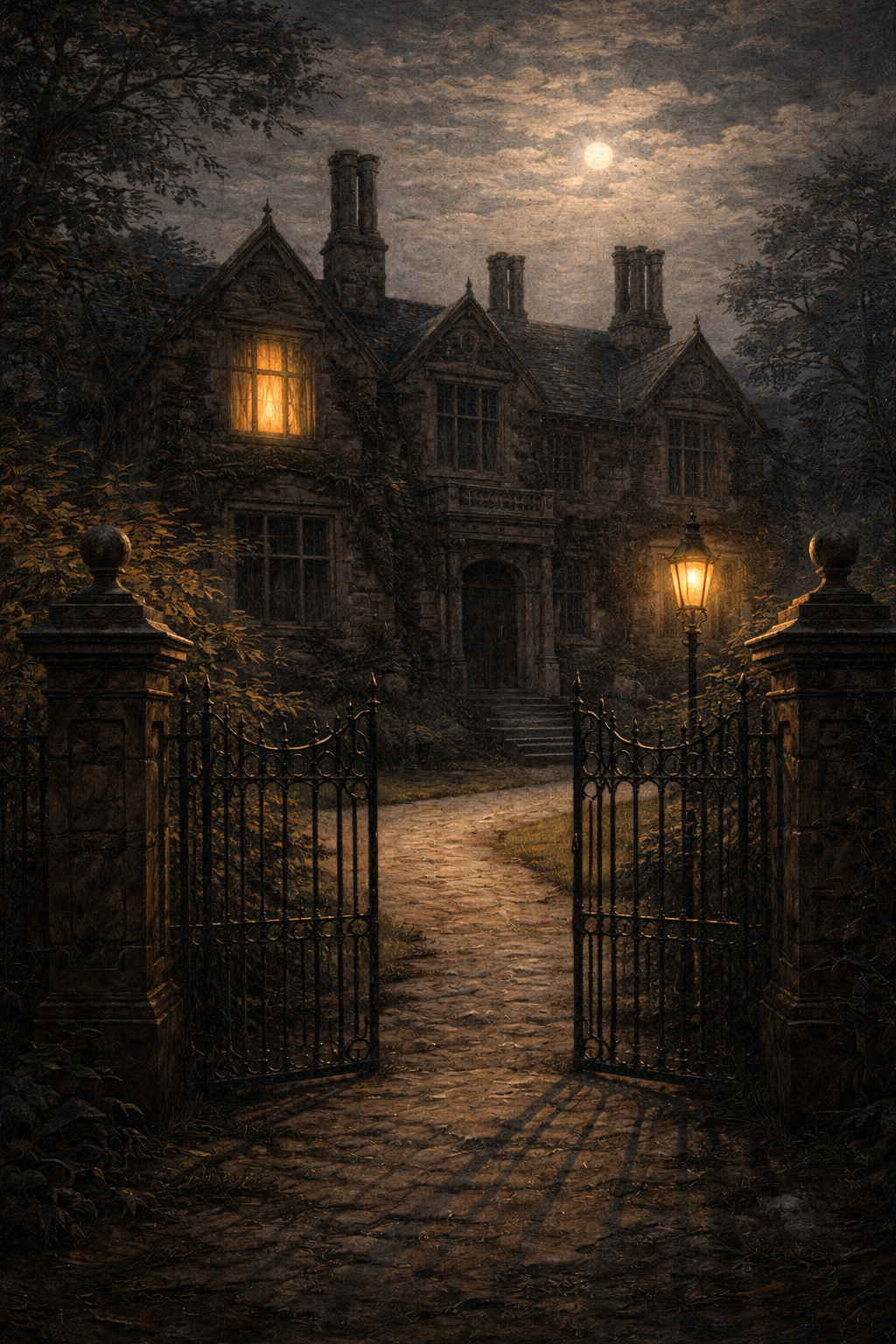
A substantial H-plan manor in the Midlands vernacular style. Great hall, two parlours, a chapel wing. The stone gateway bearing the Hale motto was cut at this time: Malis Temporibus, Sedemus Firmi. In Evil Times, We Stand Fast.
Read Volume III →
Era IV · Civil War
1643
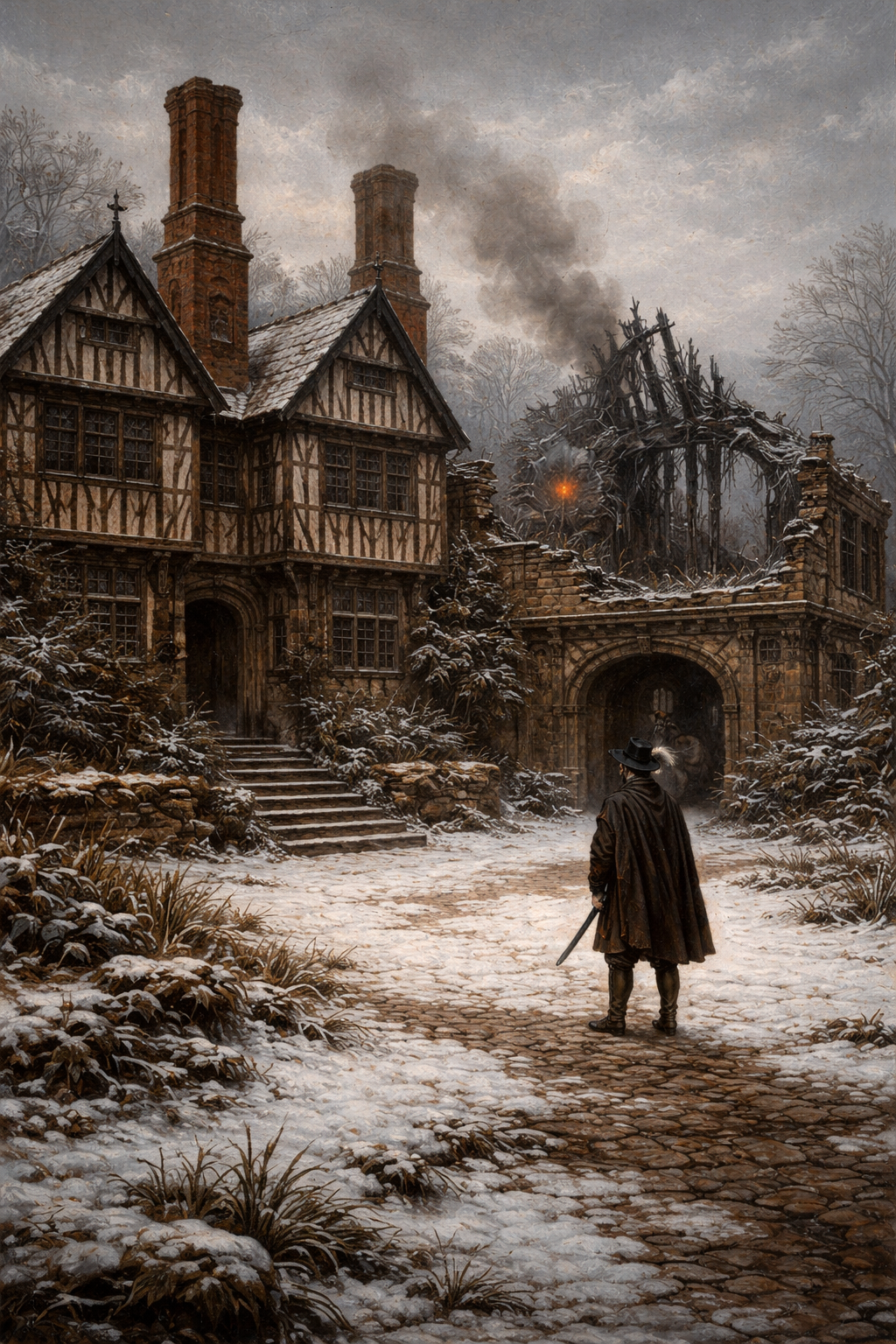
The Damaged House

Thomas Hale garrisoned Royalist troops here in the winter of 1642. In 1645, a Parliamentary detachment occupied the estate for three weeks and burned the chapel wing before withdrawing. Thomas returned to find a third of the house in ruin.

What changed
The chapel wing was never rebuilt. In its place Thomas erected a blank stone wall — a deliberate scar, left as memorial. His journal entry for 14th November 1645 reads only: They took the roof off God's room. I will leave it so. Let the family remember what we did to each other.
Read Volume IV →
Halecroft with damaged chapel wing, 1645
Halecroft Georgian west wing addition, c. 1750
Era V · Georgian
1748
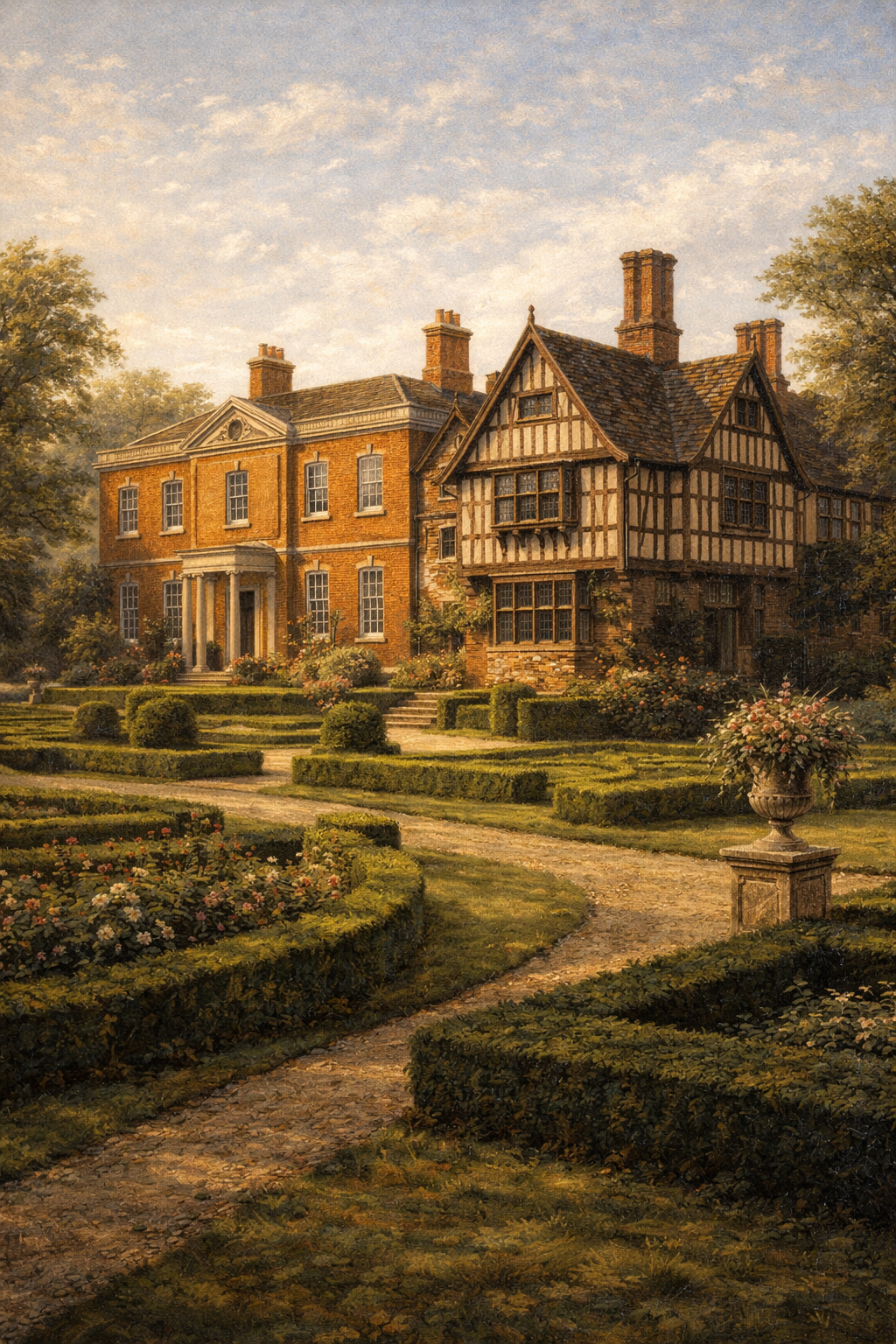
The West Wing

Sir Nathaniel Hale's son, flush with his father's City fortune, commissioned the west wing and a redesign of the gardens in the Capability Brown manner. Halecroft entered its period of greatest grandeur. The library was installed at this time — a room of some four thousand volumes.

What was built
The west wing in Georgian red brick, with a long sash-windowed façade at odds with the older Tudor core. Formal parterre gardens. A walled kitchen garden. The Halecroft library — locked since 1882, its contents uncatalogued.
Read Volume V →
Era VI · Regency
1813
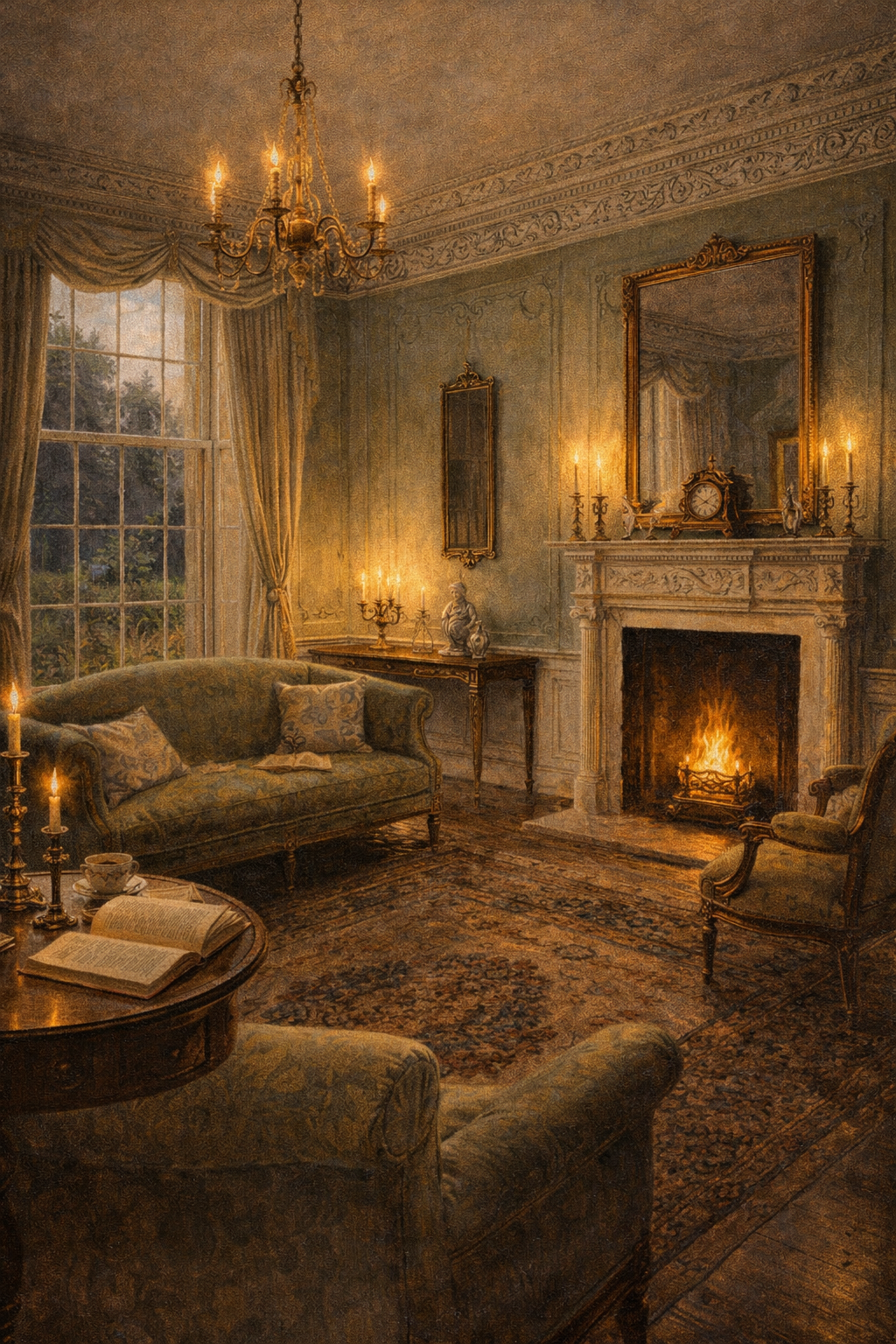
The Drawing Room

Lady Charlotte Vane-Hale redecorated the principal rooms in the Regency fashion and made Halecroft briefly fashionable as a summer retreat for her London circle. The drawing room installed in this period survives largely intact.

What changed
The drawing room, dining room, and entrance hall were refitted. Plasterwork ceilings, a new staircase. It was the last time the interior was substantially altered before the Victorian era. The drawing room fire has not been lit since Edmund's death in 1882.
Read Volume VI →
Halecroft drawing room, Regency period c. 1813
Halecroft, 1882 — year of Edmund's death
Era VII · Victorian
1882
The Locked Room

Edmund Hale II was found dead in his locked study on the 14th of August, 1882. The inquest returned natural causes. His widow Eleanor ordered the study sealed. It has not been opened since. The key is believed to remain inside.

What changed
The east wing was closed and has remained largely uninhabited. The study door — second floor, east passage — bears a wax seal placed by Eleanor Hale in September 1882. The seal is still intact. No member of the family has given an explanation for why.
Read Volume VII →
Era VIII · Great War
1915
The Hospital

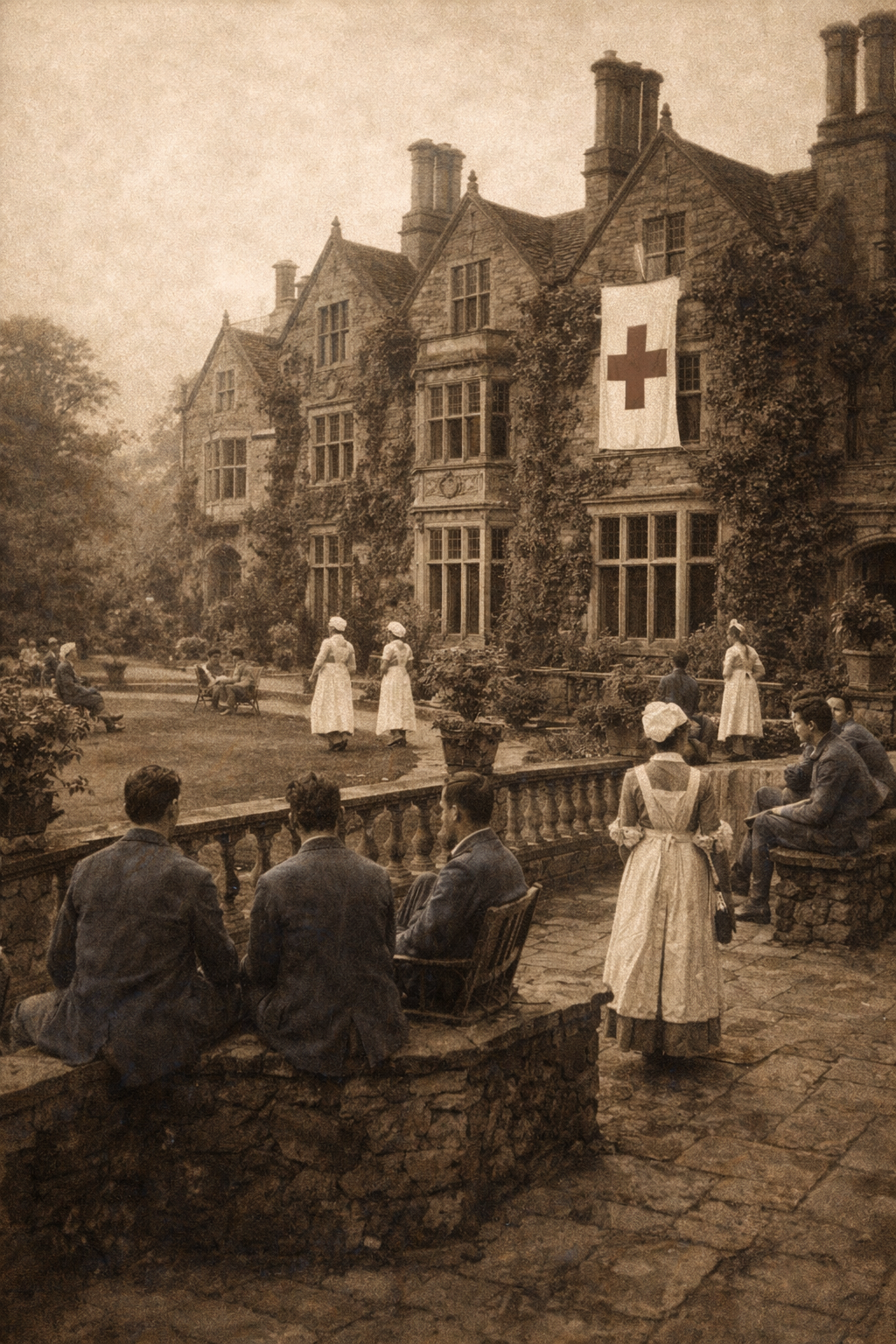
In January 1915 the family offered Halecroft to the War Office as a convalescent hospital for wounded officers. The house served in this capacity for three years. At its peak, forty-two men were housed in the principal rooms.

What changed
The great hall and drawing room were stripped and fitted with iron-framed hospital beds. The formal gardens became a rehabilitation walk. A small cemetery was established in the orchard — twelve graves, all named, all maintained. The hospital register survives in the family archive.
Read Volume VIII →
Halecroft as a convalescent hospital, 1915
Halecroft post-war, 1947 — diminished
Era IX · Post-War
1947
The Diminished House

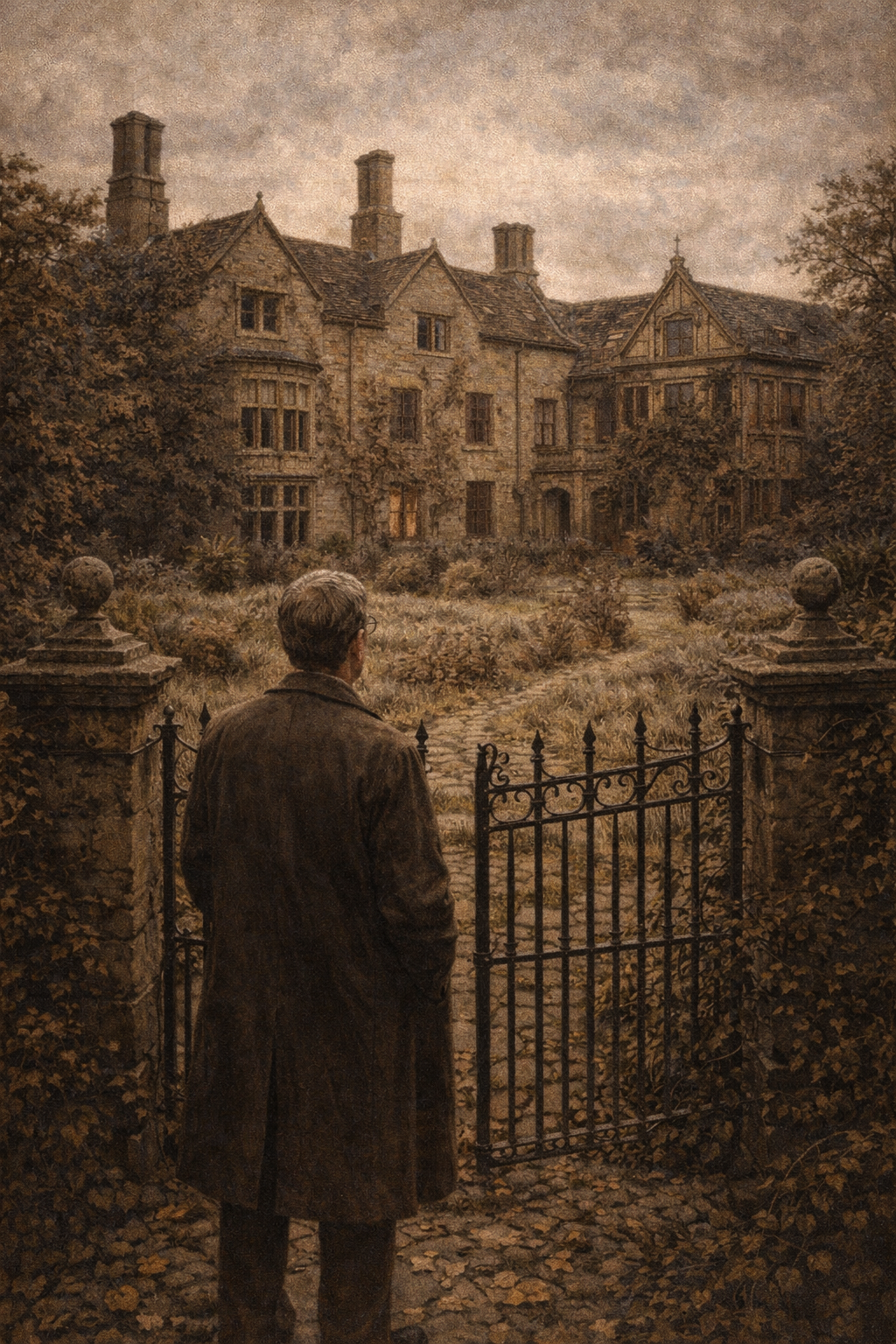
Edmund Marsh-Hale returned to Halecroft in the autumn of 1947 to find it half-leased to a land management company, the gardens run to seed, and the west wing showing signs of damp. He wrote to his wife: The house looks as though it has been waiting, and is not sure it was worth it.

What changed
The formal gardens were not restored. The parterre was grassed over. Three bedrooms in the west wing were permanently closed due to structural damp. The walled kitchen garden was given over to a tenant farmer. Halecroft began its long reduction.
Read Volume IX →
Era X · Present
2024
The Archive Room

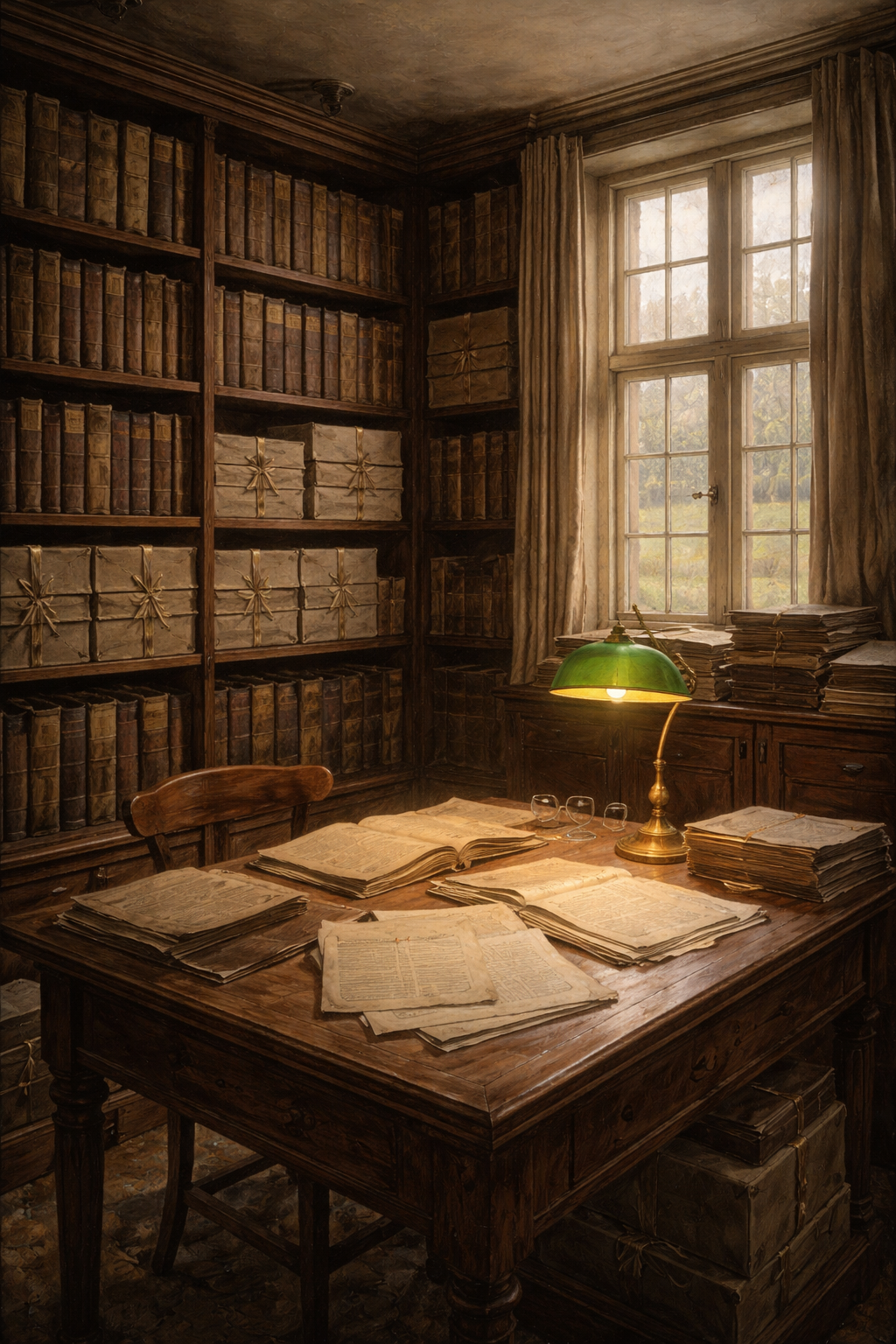
James Marsh-Hale has spent the last decade restoring the south wing and establishing the archive room in what was once the morning room. It is here that the nine wax-sealed ledgers reside, along with the bulk of the family papers.

Present state
South wing habitable and restored. North wing partly occupied. The east wing remains closed — the locked study on the second floor undisturbed. The library is catalogued but the door kept locked. The orchard cemetery is tended twice yearly. The stone gateway still bears the motto, legible if you know where to look.
Read Volume X →
Halecroft today — the archive room, 2024
Archivist's Note · 2026
The East Wing Remains Sealed

The study on the second floor of the east wing has not been opened in one hundred and forty-three years. The wax seal placed by Eleanor Hale in September 1882 is intact. James Marsh-Hale has stated, in writing, that he does not intend to open it. His reasons are not recorded in this archive.